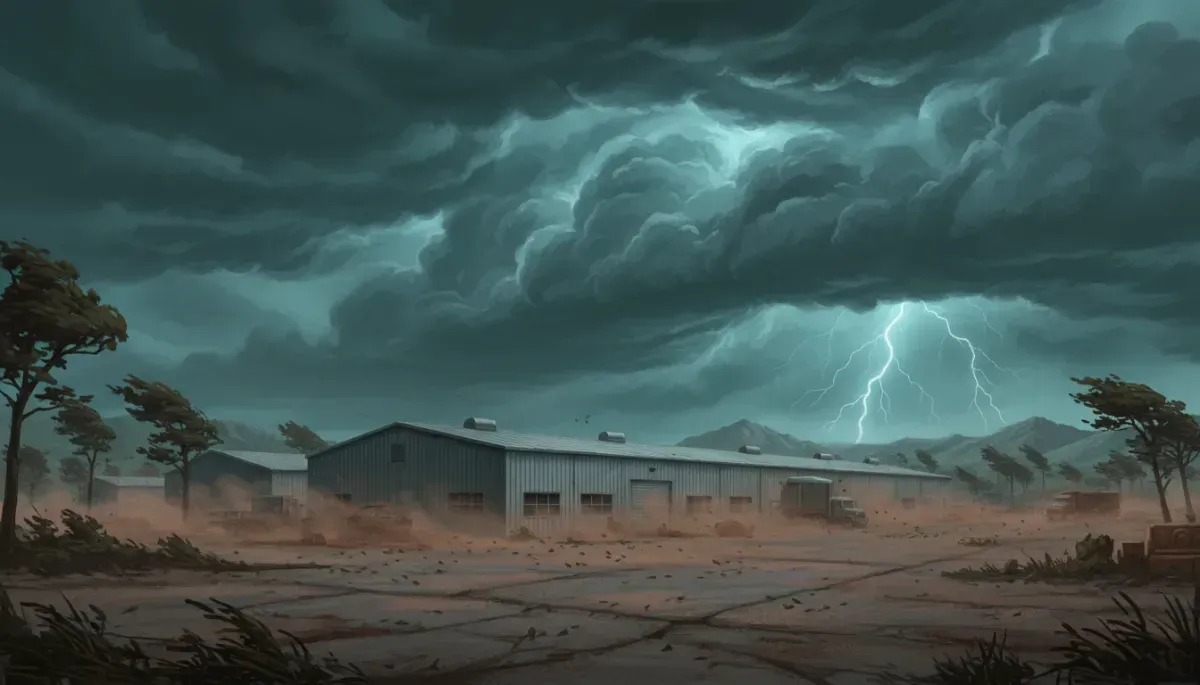
Is Your East Texas Shop Ready for Spring Storms?
Commercial Construction, Metal Buildings, Storm Protection, East Texas
Spring Storm Season Test: Can Your East Texas Shop Handle High Winds?
Is your shop or warehouse really ready for the brutal spring storm season in East Texas, or is one bad wind event all it would take to shut you down?
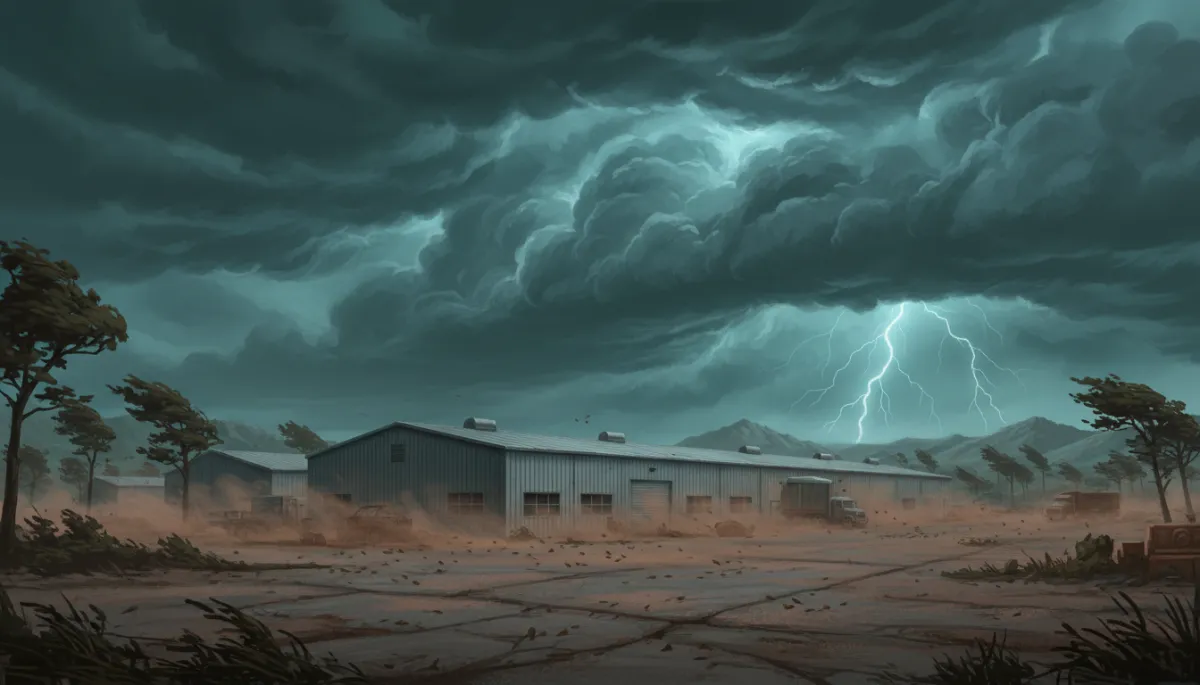
Is Your East Texas Shop Ready for Spring Storms?
Steel buildings give your business a fighting chance against severe weather
One violent spring storm can expose every weakness in an aging commercial building.
The Brutal Reality of Spring Weather
The sky turns an eerie shade of green, the air gets incredibly heavy, and the warning sirens start to echo across the county. If you run a business in this part of the state, you know exactly what spring means. It brings heavy rain, massive hail, and straight-line winds that can tear a roof right off a building.
I am Max “Steel King” Vargas, and I handle commercial building projects for RYZ Construction. I spend my days helping business owners design and erect structures that actually last. When spring rolls around, my phone rings constantly with business owners panicking about their aging wooden shops and cracking brick warehouses. They want to know if their inventory and equipment will survive the next big squall.
You cannot control the weather, but you can control what stands between your business and a severe storm. In this guide, we will look at exactly what high winds do to a commercial structure. We will explore the unmatched wind resistance metal buildings Texas businesses trust, and break down exactly what makes steel the ultimate defense. By the end, you will know exactly why upgrading to a custom metal building is the smartest way to protect your livelihood.
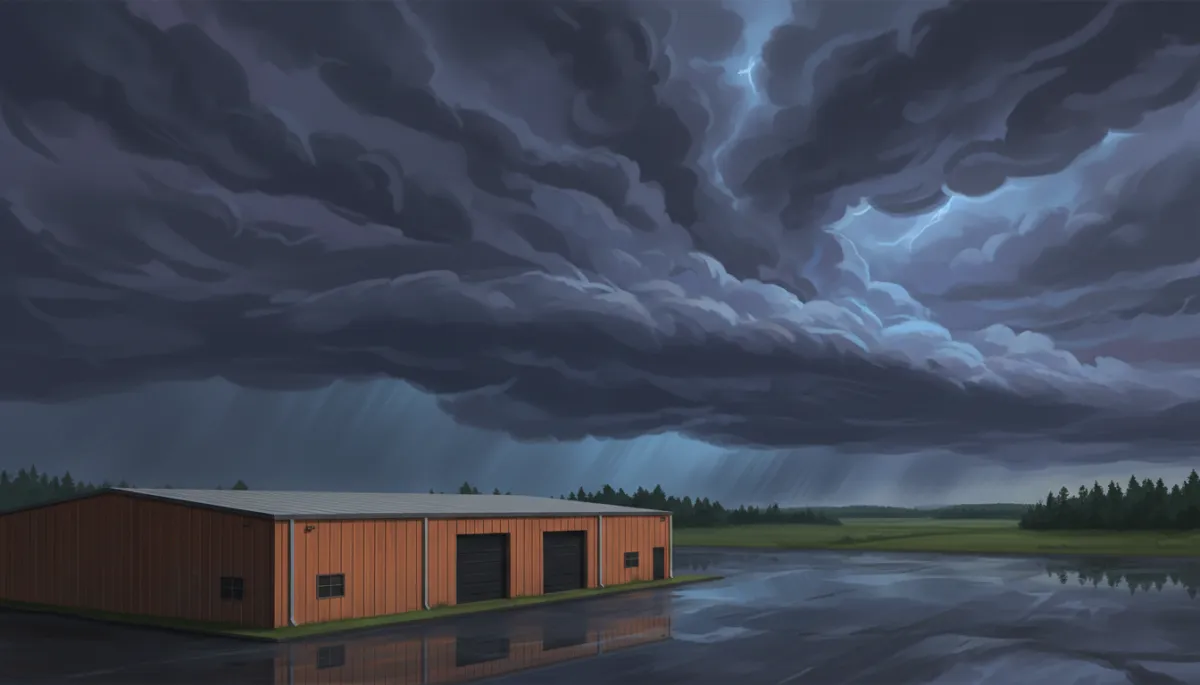
In East Texas, spring storms are a guarantee; the only question is whether your building can take the hit.
📌 Key Takeaway: You cannot stop high winds, hail, or driving rain—but you can choose a building system designed to survive them.
How Traditional Buildings Fail Under Pressure
To understand the value of steel, you have to look at how traditional materials handle severe weather. Wood-framed commercial buildings rely on thousands of individual nails and joints to hold everything together. When heavy wind hits a wooden shop, the entire structure shifts.
This shifting creates sheer stress. Over time, the constant pushing and pulling loosens the nails holding the roof trusses to the walls. Once that connection weakens, a strong gust of wind can easily rip the roof decking completely off. Without the roof tying the walls together, the entire building can collapse like a house of cards.
Concrete block buildings face a different set of problems. While heavy, rigid concrete does not bend. When sudden, extreme wind pressure hits a rigid wall, it simply cracks. Once a mortar joint cracks, the structural integrity of that wall drops significantly. You end up with expensive masonry repairs and a shop that is permanently weakened.
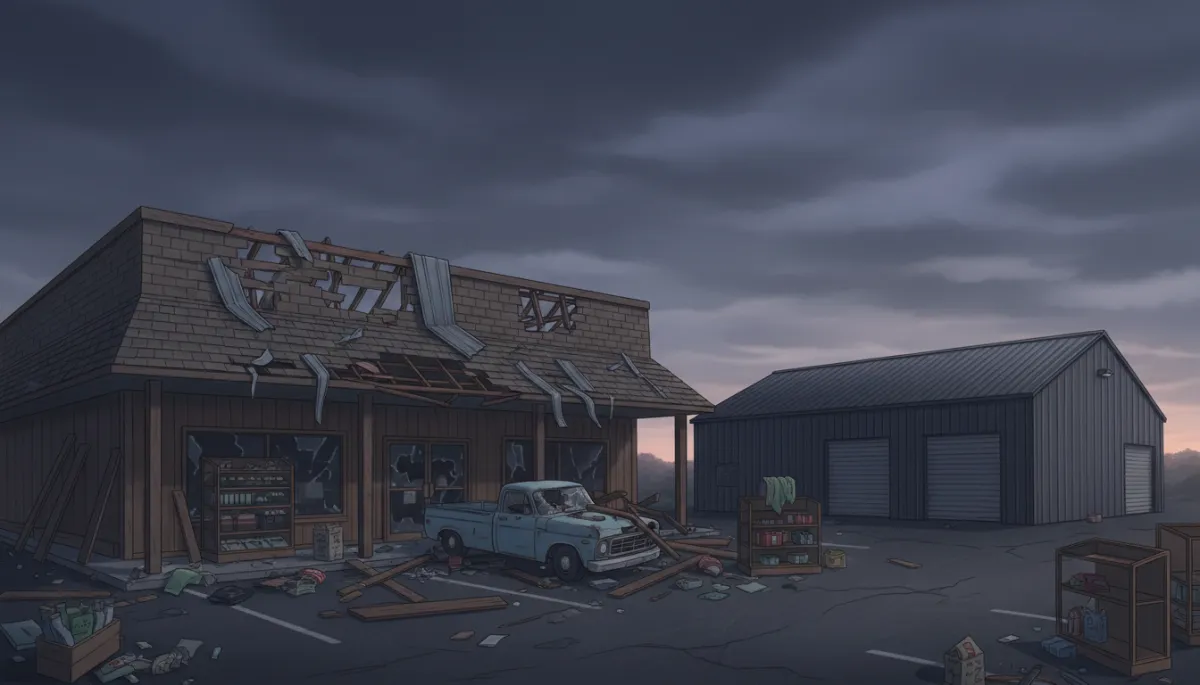
Traditional wood and masonry shops often reveal their weak points the first time serious winds roll through.
⚠️ Warning: Once nails back out or masonry cracks, every future storm becomes more dangerous and more expensive.
The Science Behind Wind Resistance Metal Buildings Texas Trusts
Steel behaves entirely differently under extreme stress. The secret lies in a property called ductility. Ductility means the material can bend and flex under massive pressure without actually breaking or losing its core strength.
When a 70-mph straight-line wind hits a commercial steel building, the steel frame actually absorbs and distributes that kinetic energy. The rigid portal frames flex just enough to handle the massive pressure changes, keeping the primary structure completely intact. This flexibility is the core reason why metal buildings survive storms that level traditional wooden shops.
Furthermore, metal buildings utilize continuous framing components. Instead of relying on thousands of tiny nails, a steel building uses heavy-duty, high-tensile bolts to connect the columns directly to the roof rafters. This creates a continuous, unbroken line of strength from the concrete foundation all the way to the peak of the roof.
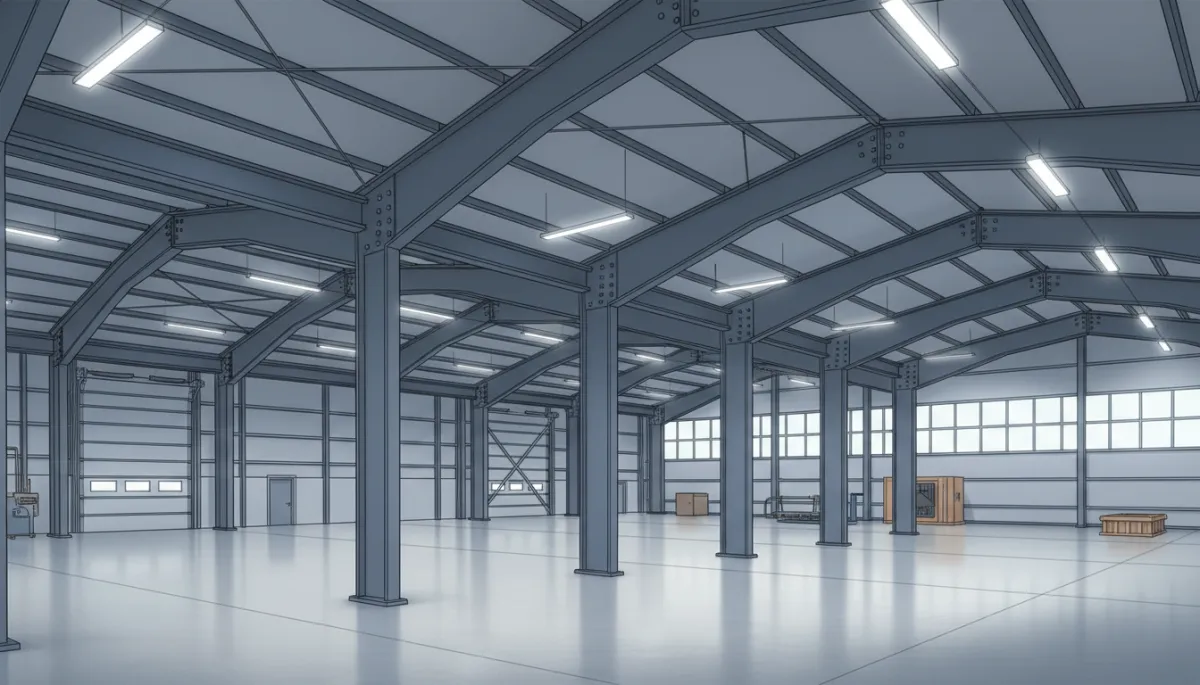
Continuous steel framing and high-tensile connections let the structure flex, not fail, when winds surge.
💡 Pro Tip: Ask your builder how the frame transfers wind loads from the roof all the way down into the foundation.
What Makes Storm-Proof Commercial Buildings East Texas Ready?
A standard metal building is strong, but an engineered storm-resistant building takes things to a whole new level. When we design a facility for severe weather zones, we focus on three critical engineering elements to keep your business safe.
Engineered Wind Load Ratings
Every commercial metal building we design comes with a specific, engineered wind load rating. We do not just guess how strong the frame needs to be. We calculate the exact maximum wind speeds your specific county experiences.
Engineers design the thickness of the steel columns, the spacing of the structural bays, and the pitch of the roof to easily handle those local wind speeds. This customized engineering guarantees your shop can withstand the exact weather patterns it will face year after year.
Heavy-Duty Fasteners and Paneling
The frame only does half the work. The exterior metal panels must stay attached to protect the inside of your shop. We use high-grade, commercial steel panels featuring deep ribs for added rigidity.
More importantly, we secure these panels using specialized, weather-sealed fasteners. These heavy-duty screws feature integrated washers that expand as they tighten. They lock the panels tightly to the steel framing and create a watertight seal that high winds cannot easily pry apart.
Secure Foundation Anchoring
Uplift is the most dangerous force in a high-wind event. The wind actively tries to pick your building up off the ground. To combat this, storm-proof commercial buildings East Texas businesses rely on feature massive anchor bolts.
Before we pour your concrete foundation, we set thick steel anchor bolts directly into the concrete forms. Once the concrete cures, those bolts become a permanent part of the earth. We then bolt the heavy steel columns directly to those embedded anchors. Your building essentially becomes rooted into the ground, making it nearly impossible for high winds to achieve structural uplift.
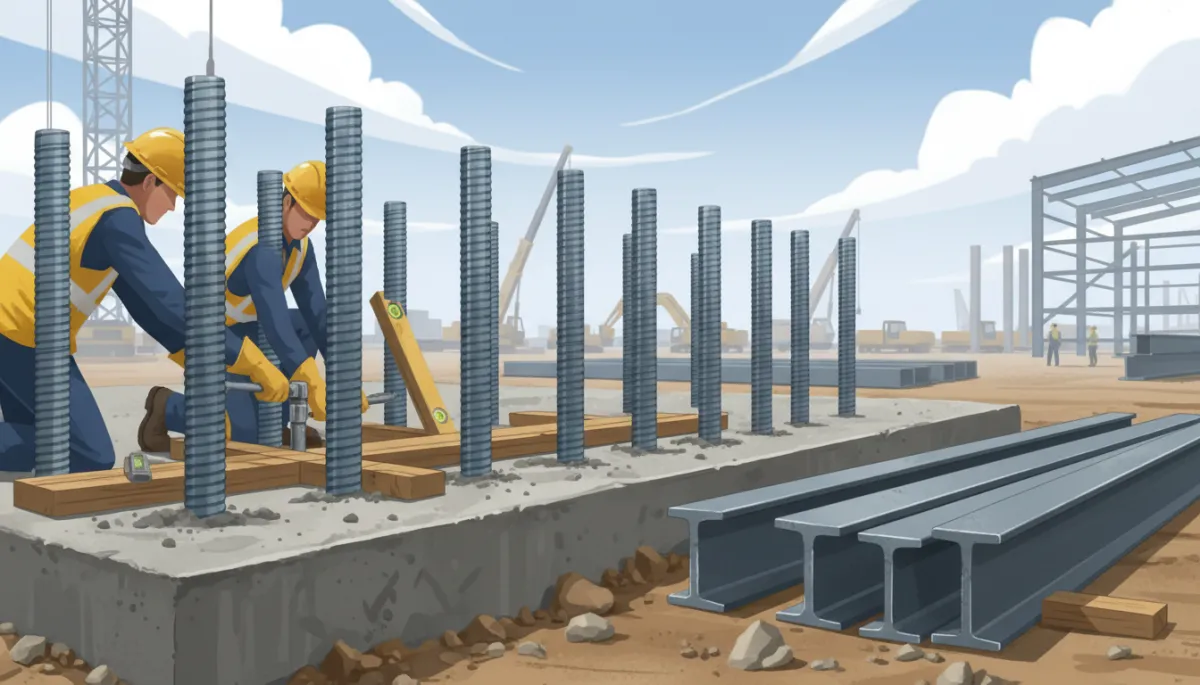
Properly engineered foundations and anchor bolts keep your entire frame locked to the ground when winds try to lift it.
📌 Key Takeaway: True storm resistance is a system: engineered frame, secure panels, and rock-solid anchoring all working together.
Protecting Your Inventory, Your Team, and Your Revenue
Upgrading your shop is about much more than just having a nice-looking building. It is about business continuity. If a spring storm rips the roof off your wooden warehouse, you face massive losses.
Your expensive CNC machines, your inventory, and your customer orders all sit exposed to the elements. You have to deal with insurance adjusters, find temporary workspace, and tell your clients their orders will be delayed. A destroyed building can easily bankrupt a growing company.
A heavy-duty steel building acts like a fortress for your assets. When the warning sirens go off, you want the peace of mind knowing your team and your equipment sit inside a highly engineered, storm-resistant shell. You get to open your doors the morning after a major storm and get right back to work while your competitors are still picking up pieces of shingles from their parking lots.
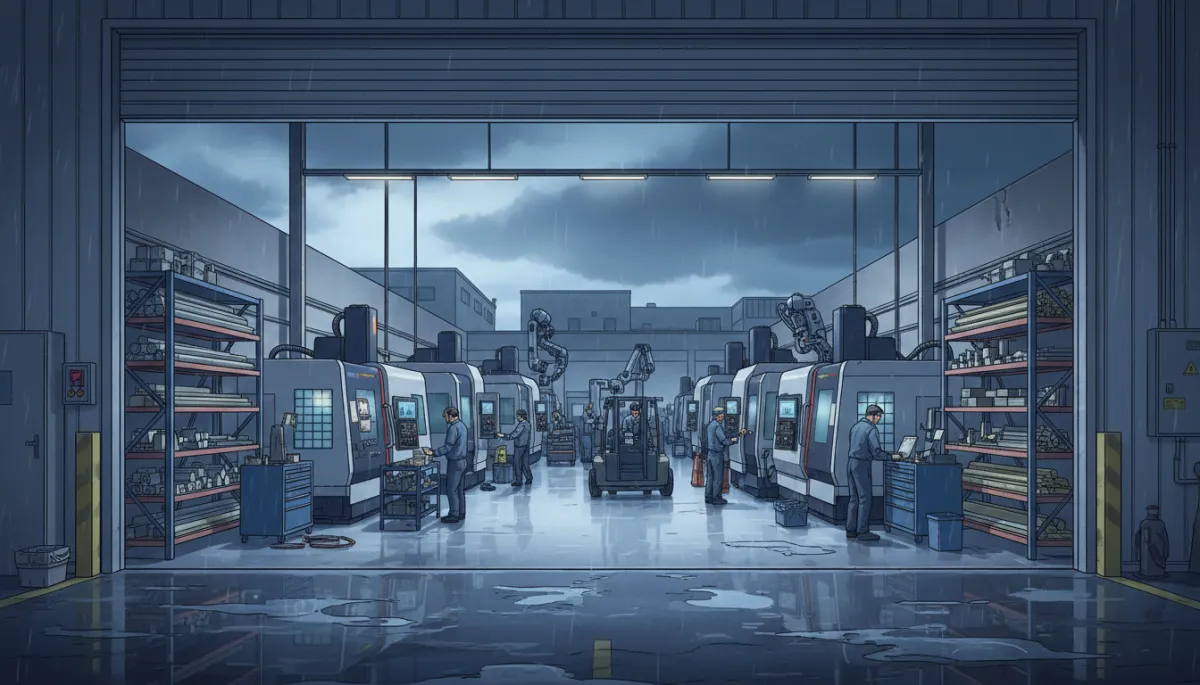
When your building holds, your people, equipment, and revenue stream stay protected and productive.
💡 Pro Tip: When you evaluate storm risk, factor in downtime, lost customers, and equipment replacement—not just repair costs.
Secure Your Business Before the Next Storm Hits
Take a hard look at your current shop or warehouse. Do the walls creak when a heavy wind blows? Do you see daylight through the roof joints? Are you constantly patching roof leaks after heavy spring rain? If so, your building is already failing the storm season test.
Do not wait for a catastrophic failure to upgrade your facilities. Investing in a highly engineered metal building ensures your company remains operational, safe, and profitable no matter what the weather does.
Are you ready to build a shop that actually stands up to the worst spring weather? Contact RYZ Construction today to discuss our storm-resistant commercial metal buildings. Our expert team will evaluate your space needs and design a custom steel fortress built specifically for your local climate. Let the “Steel King” and RYZ Construction build you a facility that protects your business for decades to come.
The best time to storm-proof your shop is before the sirens start blaring this spring.


