
Top Sustainable Building Materials 2026
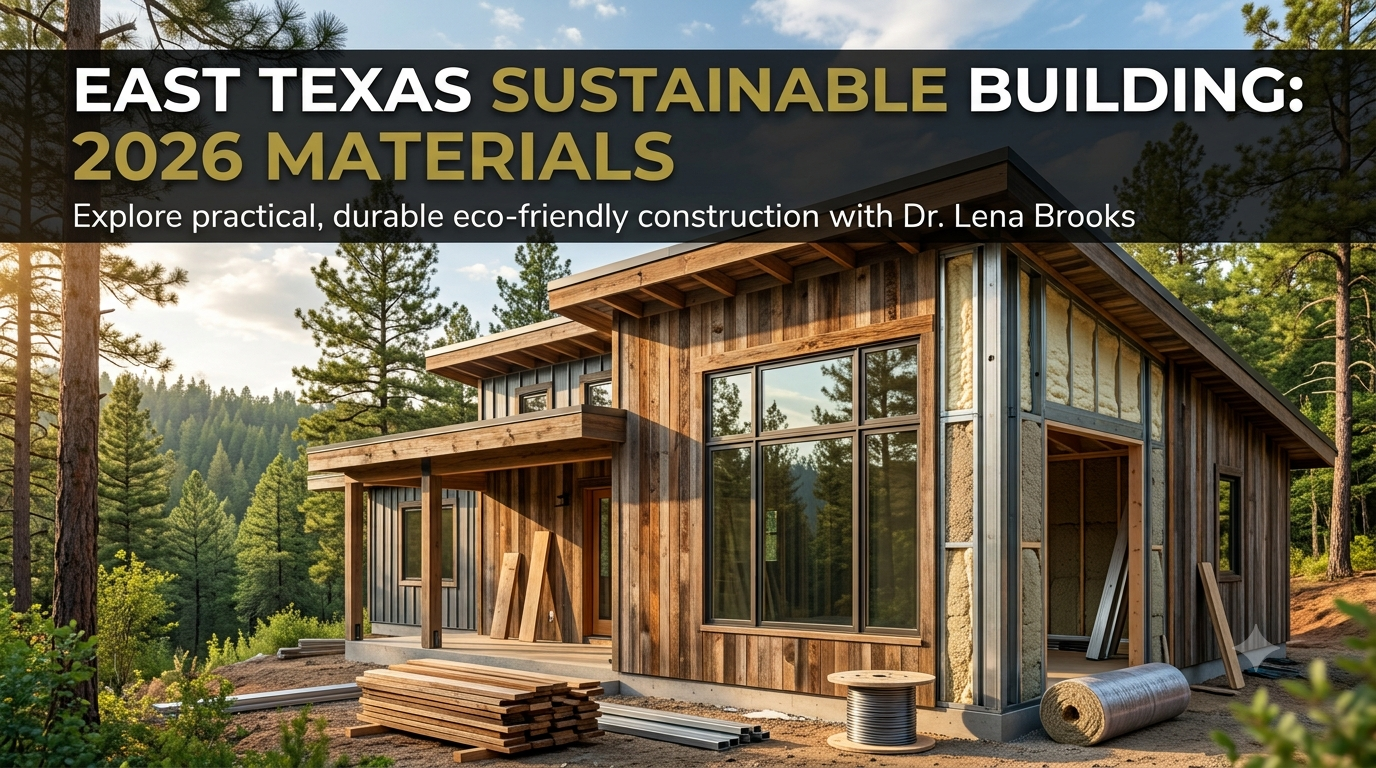
Sustainable Building in East Texas: What Materials Are Worth It in 2026?
Dr. Lena “Trendsetter” Brooks
The construction landscape is changing rapidly. For years, the industry treated sustainability as a buzzword or an expensive luxury. Homeowners often paid premium prices for products that offered little functional benefit. Now, as we build through 2026, the market demands something better. We are seeing a massive shift toward practical, results-driven sustainability. Builders and homeowners want materials that protect the environment while actually improving the durability and efficiency of the home.
East Texas presents a unique environment for construction. High humidity, heavy rainfall, and fluctuating temperatures put extreme stress on residential structures. You need materials that can withstand these specific regional challenges. Greenwashing no longer works here. We need tangible results.
In this post, we will cut through the marketing hype. We will explore exactly which materials offer genuine value for eco-friendly construction Texas residents can trust. You will learn why certain materials dominate the 2026 market and how they specifically benefit East Texas projects. Finally, we will outline practical steps you can take to integrate these materials into your next build.
The Reality of Eco-Friendly Construction Texas Style
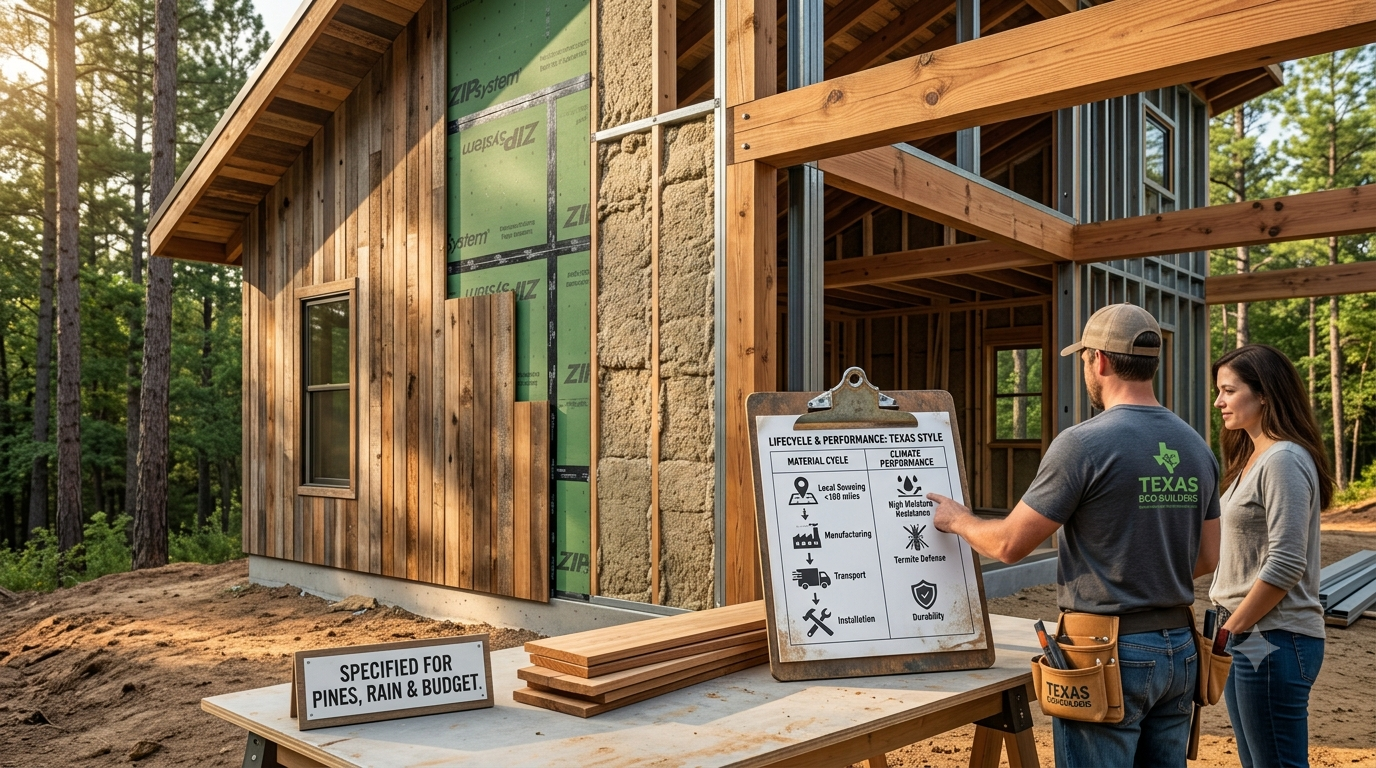
Practical sustainability means choosing materials that make sense for your specific climate and budget. It involves looking at the entire lifecycle of a product. We must consider how it is manufactured, how far it travels to reach the job site, and how it performs once installed.
In East Texas, sustainable building requires a hyper-local approach. You cannot simply copy a green building template from California or New York. A material that works perfectly in a dry desert climate might warp or rot in the Piney Woods. True eco-friendly construction Texas builders embrace focuses on longevity and performance under heavy moisture loads.
This approach saves money. When you choose materials designed for local conditions, you reduce maintenance costs. You also extend the lifespan of the structure. By prioritizing materials that offer both environmental benefits and superior local performance, you create a home that truly stands the test of time.
Top Sustainable Building Materials East Texas Demands
My trend analysis shows three specific materials leading the charge in 2026. These options move past the hype to deliver measurable benefits. They represent the best sustainable building materials East Texas has to offer right now.
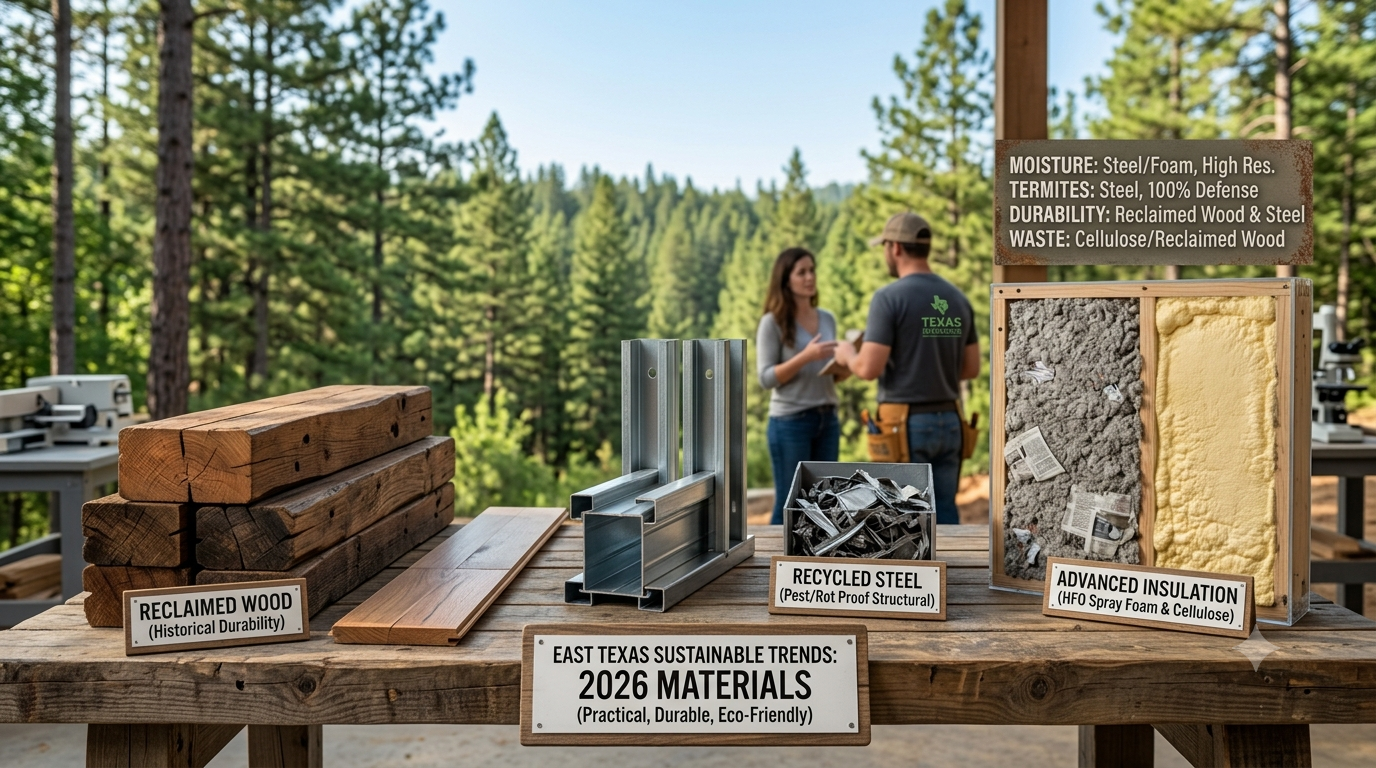
Reclaimed Wood: Historic Charm Meets Durability
East Texas has a rich logging history. Today, forward-thinking builders tap into this history by utilizing reclaimed wood. This material comes from old barns, factories, and dismantled residential structures. Instead of sending this lumber to a landfill, processors clean and mill it for new projects.
Reclaimed wood offers incredible structural benefits. The timber harvested decades ago grew much slower than modern plantation pine. This slow growth resulted in a tighter grain, making the wood significantly stronger and more stable. It resists the warping and twisting that often plagues new lumber exposed to high humidity.
Furthermore, reclaimed wood brings unmatched aesthetic value. Homeowners love the rich patina and historical character it adds to flooring, exposed beams, and accent walls. You get a premium, highly durable product while completely eliminating the need to harvest new trees.
Recycled Steel: The Ultimate Structural Backbone
Steel framing continues to gain massive traction in the residential sector. In 2026, almost all structural steel used in construction contains a high percentage of recycled material. Recycled steel takes old cars, appliances, and industrial scrap, melting them down to create flawless building components.
For East Texas builders, recycled steel solves several chronic problems. Unlike wood, steel completely ignores moisture. It will never rot, swell, or host mold colonies. Most importantly, it is completely impervious to termites and carpenter ants. You remove the food source, and you eliminate the pest problem entirely.
Recycled steel also provides superior strength against severe weather. As East Texas experiences increasingly intense storm seasons, steel framing keeps homes intact. The material is fully recyclable at the end of its life, creating a closed-loop system that perfectly defines practical sustainability.
Advanced Energy-Efficient Insulation
If you want to reduce your carbon footprint, you must start with your home's thermal envelope. Keeping the sticky East Texas heat outside requires advanced energy-efficient insulation. The 2026 market has moved away from traditional fiberglass batts toward sustainable, high-performance alternatives.
Spray foam insulation, specifically those utilizing hydrofluoroolefin (HFO) blowing agents, leads the market. These newer foams have an incredibly low global warming potential compared to previous generations. They expand to fill every gap in the wall cavity. This creates an airtight seal that prevents humid outdoor air from infiltrating your living space.
Cellulose insulation also offers massive benefits. Manufacturers create cellulose from recycled newspaper and treat it with non-toxic borates to resist fire and pests. Builders blow this dense material into attics and wall cavities. It provides exceptional thermal resistance and keeps massive amounts of paper waste out of local landfills.
Overcoming 2026 Supply Chain Challenges
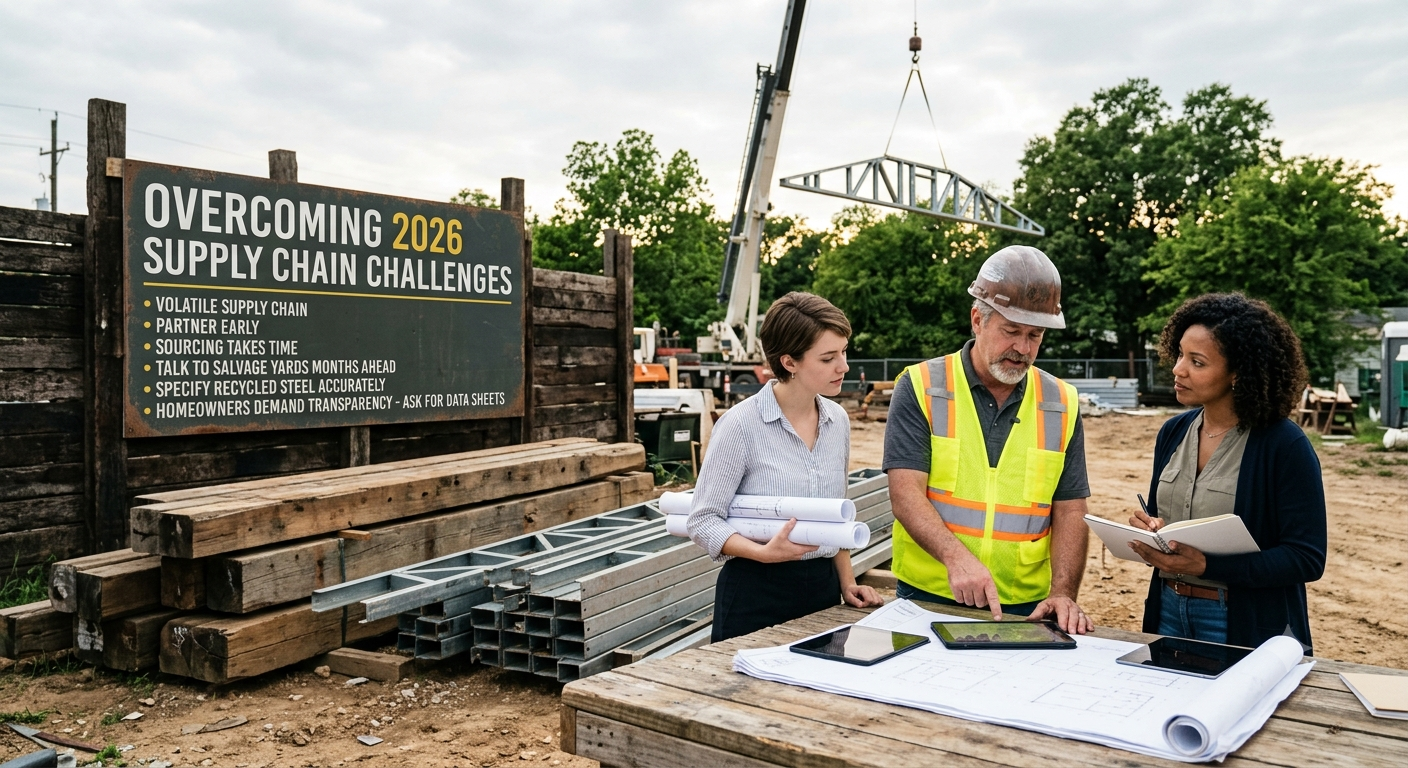
Adopting these materials requires strategic planning. The 2026 supply chain remains somewhat volatile. You cannot always run to the local hardware store and find commercial quantities of reclaimed timber or advanced insulation.
You must partner with specialized suppliers early in the design phase. Sourcing sustainable building materials East Texas contractors need takes time. Talk to local salvage yards about reclaimed wood months before you break ground. Work with your architect to specify recycled steel dimensions accurately so the factory can pre-cut the framing, minimizing waste on the job site.
Homeowners should demand transparency from their builders. Ask for product data sheets. Verify the recycled content percentages and origin of the materials. Builders who truly understand practical sustainability will happily provide this documentation.
Actionable Advice for Your Next East Texas Project
Transitioning to sustainable building practices does not have to overwhelm you. Whether you are building a custom home in Tyler or renovating a historic property in Nacogdoches, you can take immediate steps to improve your project.
First, prioritize the building envelope. Invest your budget in advanced energy-efficient insulation and high-performance windows before spending money on aesthetic upgrades. A tight thermal envelope pays you back every single month through lower utility bills.
Second, start small with reclaimed materials. If a fully recycled steel frame pushes your budget too far, use recycled steel for your roofing system. If you cannot afford reclaimed hardwood floors for the entire house, use reclaimed timber for a standout fireplace mantle or kitchen island.
Third, vet your contractors carefully. Ask potential builders about their experience with eco-friendly construction Texas climates require. A knowledgeable builder will guide you toward materials that offer the best return on investment for your specific location.
Practical sustainability is the new standard. By choosing materials that offer genuine performance benefits, you build a home that respects the environment and protects your financial investment. Start planning your material choices today, and ensure your East Texas property leads the way in 2026.


