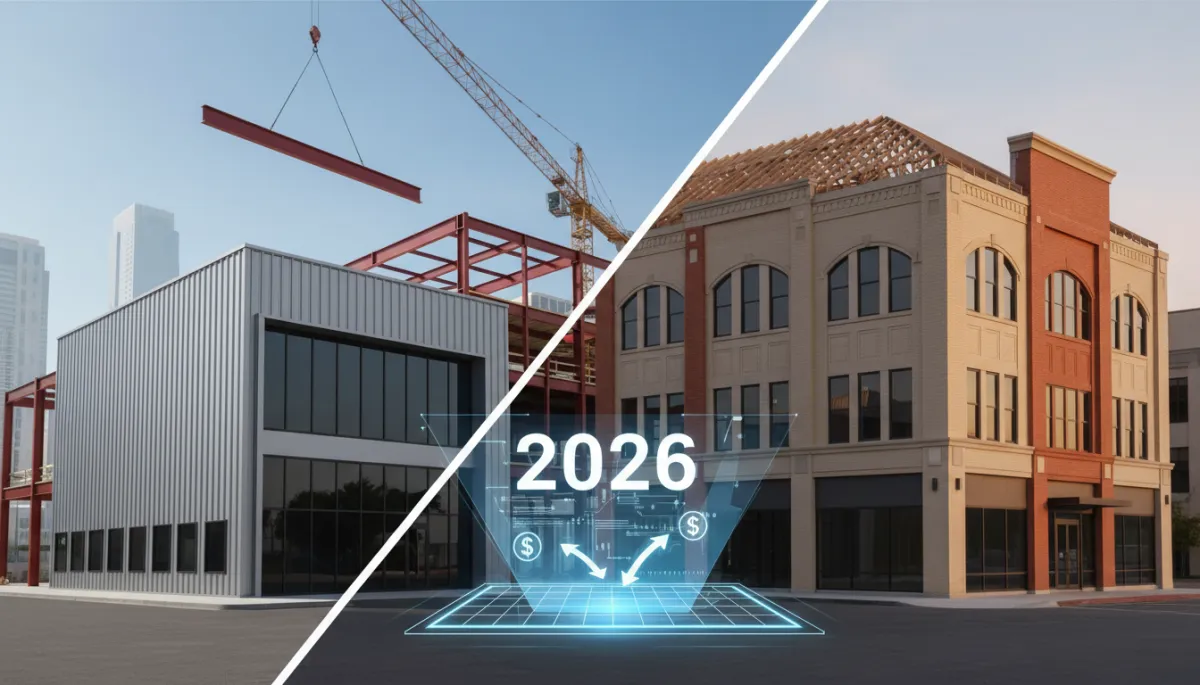
Metal vs. Traditional Buildings: Cost Savings 2026
Commercial Construction, Metal Buildings, Texas Business Expansion
Commercial Metal Buildings vs. Traditional Construction: Which Saves More in 2026 for Texas Businesses?
If you own or manage a business in Dallas, Fort Worth, Rockwall, Emory, or anywhere across East Texas, 2026 is a critical year to make smart construction decisions. Costs are up, schedules are tight, and choosing between a commercial metal building and traditional construction can make or break your return on investment.
Meet Your Expert: Max “Steel King” Vargas, Texas Commercial Building Strategist
I’m Max “Steel King” Vargas, a commercial construction specialist with RYZ Construction. For the past 20 years, I’ve helped Texas business owners plan, budget, and build everything from small metal warehouses in Emory to multi-tenant office and flex spaces around Dallas–Fort Worth. My focus is simple: design projects that pencil out, hold up to Texas weather, and support long-term growth.
Working across DFW, Rockwall, and East Texas, I’ve seen commercial metal buildings go up in months while traditional projects next door were still in site work. I’ve also seen owners overbuild with conventional construction when a well-planned metal building would have delivered the same revenue for far less cost. In this guide, I’ll walk you through how 2026 numbers really shake out, and how to decide what’s right for your expansion or new build.
Why the Metal vs. Traditional Decision Matters More in 2026
Construction costs in Texas climbed more than 6% year-to-date by mid‑2026, while labor shortages continue to squeeze schedules and budgets. At the same time, demand for industrial and data center projects around DFW and along the I‑20 and I‑30 corridors is tying up subcontractors and driving premiums on traditional builds. Every dollar you overspend on structure is a dollar you cannot put into operations, equipment, or marketing.
For many of my clients in Dallas, Fort Worth, and East Texas, the choice is not just about appearance. It is about how quickly they can get a warehouse, fabrication shop, retail showroom, or flex building open and producing revenue. With interest rates still elevated and property taxes pushing upward, shaving months off your schedule and tens of dollars per square foot off your hard costs can be the difference between a strong project and a marginal one.
💡 Pro Tip: Before you lock in land or financing, decide whether you are targeting a metal shell with flexible interiors or a fully traditional build. The answer changes your budget, timeline, and even which lots make sense to pursue.
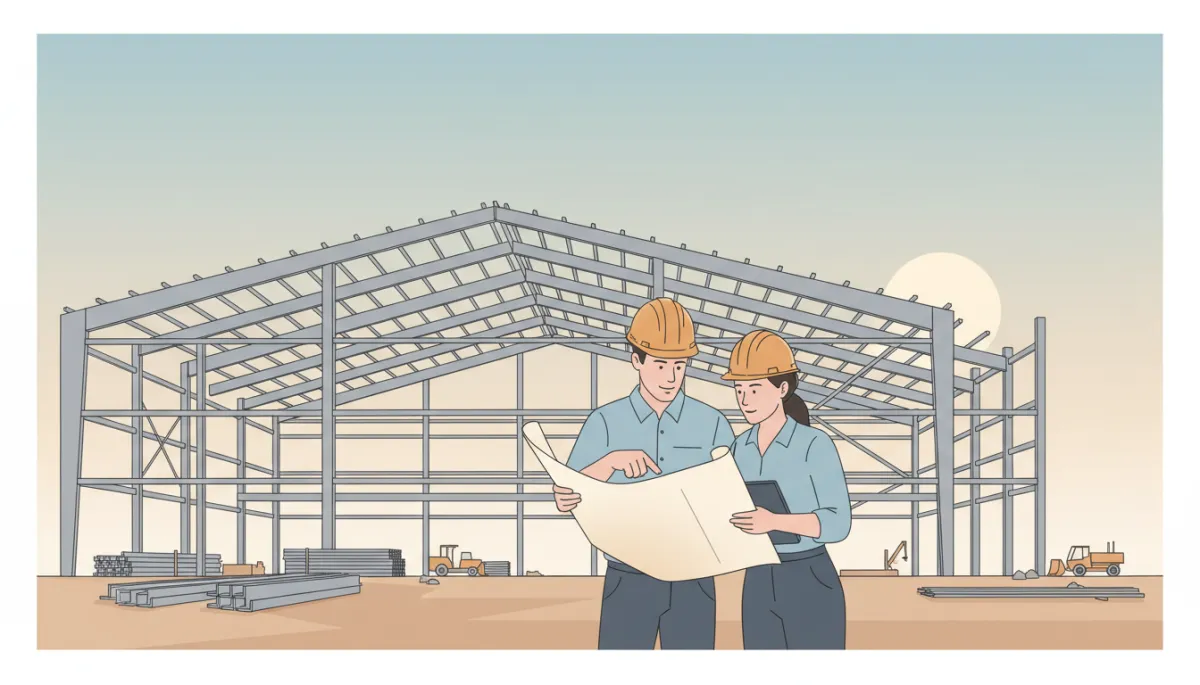
Early planning around building type often saves months and significant cost later.
2026 Cost Comparison: Metal Buildings vs. Traditional Construction in Texas
Let’s start with the numbers I’m seeing across Texas projects in 2026. For commercial metal buildings, especially pre‑engineered metal buildings (PEMBs), a basic shell in Texas typically runs about $12–$20 per square foot. Once you add erection, foundation, and standard openings, turnkey shells usually fall between $20 and $45 per square foot. If you build out conditioned interiors, offices, or showrooms, you are usually in the $45–$105+ per square foot range, depending on mechanical and finish levels.
Traditional commercial construction is a different world. Industrial and warehouse projects can start around $65 per square foot and climb past $200. Retail and office often land between $115 and $340 per square foot, while medical and high-end hospitality can push $250 to $475 per square foot or more. Dallas–Fort Worth tends to sit 15–25% higher than smaller East Texas markets due to labor and demand pressure, especially around hot submarkets like Frisco, Rockwall, and key logistics corridors.
On a 20,000‑square‑foot project, that gap is huge. A PEMB shell might run $600,000–$900,000, while a comparable traditional build can easily exceed $3 million once you factor in structure, finishes, and complex systems. That is why so many distribution, light manufacturing, and flex projects around DFW and East Texas are going metal first. You simply get more covered, usable space per dollar.
💡 Pro Tip: Always clarify whether a quote is for the shell only, a code‑ready shell, or a fully finished building. I see owners miscompare numbers all the time because scopes are not aligned.
Real‑World Texas Scenarios: When Metal Buildings Win, and When They Don’t
In Rockwall, I recently walked a client through a 15,000‑square‑foot warehouse and showroom concept. Their first instinct was a traditional tilt‑wall or masonry structure to “look more professional.” Once we priced both options, the metal building approach saved roughly $1.2 million on hard costs and shortened the schedule by several months. We upgraded the façade with masonry accents, glass, and canopies, giving them the street presence they wanted without the full cost of conventional construction.
In Emory and smaller East Texas towns, I see metal buildings shine for equipment storage, fabrication shops, agricultural supply, and small‑bay flex spaces. Business owners there care about function, durability, and low operating costs more than high‑end architectural detail. A well‑insulated PEMB with overhead doors, LED lighting, and efficient HVAC delivers exactly that at a price point traditional construction cannot match in 2026.
On the other hand, if you are developing a Class A office tower in Uptown Dallas or a high‑image medical facility in Fort Worth, traditional construction usually makes more sense. You may need more complex structural systems, higher acoustic performance, and architectural flexibility that goes beyond a typical steel frame and metal panel envelope. In those cases, the question is not “metal or traditional,” but how to value‑engineer within a traditional system without sacrificing leasing power or patient experience.
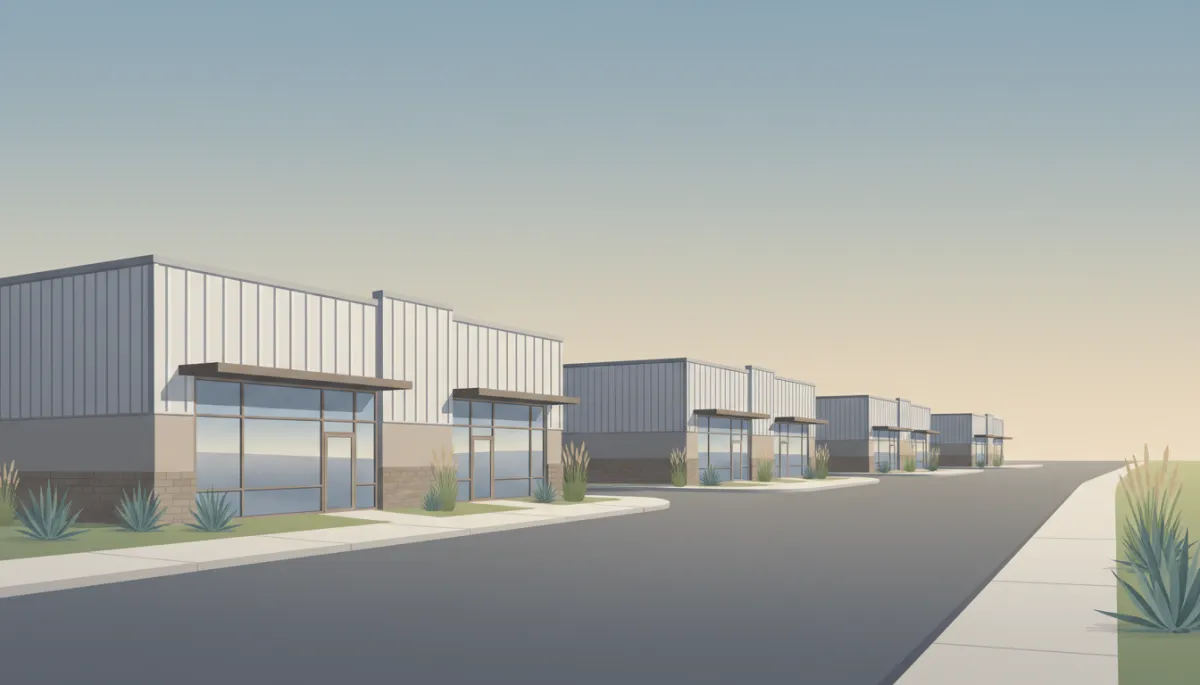
Thoughtful façade upgrades help metal buildings compete visually with traditional projects.
Beyond Upfront Cost: Lifespan, Maintenance, and Operating Savings
Pure construction cost is only half the story. When I compare options with clients in Dallas or East Texas, we also look at long‑term performance. A properly designed commercial metal building, with quality coatings and insulation, can provide 40–60 years of service life with relatively modest maintenance. Standing‑seam metal roofs, in particular, handle Texas sun, hail, and heavy rain better than many conventional flat roof assemblies when detailed correctly.
Maintenance on metal buildings typically centers on roof inspections, fastener checks, sealant renewal, and occasional repainting or panel replacement after severe storms. In North Texas, where hail and wind events are increasingly common, I recommend semiannual inspections plus a full review after any major storm. Catching loose trim or compromised sealant early is far cheaper than repairing water‑damaged interiors or rusted framing later. Traditional buildings, by comparison, may carry higher ongoing costs for masonry tuck‑pointing, stucco repair, or membrane roof replacement.
Energy performance is another factor. With modern insulation systems, thermal breaks, and high‑performance doors and windows, metal buildings can hit aggressive energy targets. For warehouses in DFW or distribution centers along I‑30, I often specify cool‑roof finishes, high R‑value roof insulation, and LED lighting with controls. Those upgrades pay back quickly in Texas heat, regardless of structure type, but the lower shell cost of metal buildings often frees up budget to invest more heavily in efficiency.
💡 Pro Tip: Build an operating budget model for at least 10 years. Include utilities, routine maintenance, and likely roof or envelope repairs. A slightly higher upfront spend on insulation or roof quality can beat a cheaper build that bleeds cash every summer.
Practical Planning Tips: Getting the Most from a Commercial Metal Building
If you are leaning toward a metal building for a 2026 project, start by defining your true use. Are you building dry storage, light manufacturing, conditioned office, or a mix of all three? In DFW and East Texas, many of the best‑performing projects are hybrid: metal shells with strategic conditioned office pods, restrooms, and break areas. You capture the cost efficiency of steel while giving staff and customers a comfortable, professional environment.
Next, think about expansion. Metal buildings are excellent for phased growth. I often design shells in Dallas or Rockwall with framed openings and structural capacity for future bays or crane loads. Spending a little more on foundations and framing up front can save a fortune when you are ready to add on in five years. In fast‑growing corridors, that flexibility is a real competitive edge.
Finally, do not neglect site planning. Metal buildings are often paired with large truck courts, laydown yards, or outdoor storage. In East Texas, I see owners underestimate paving, drainage, and utility costs more than any other line item. Work with a contractor who understands local soils, drainage patterns, and municipal requirements, so your “cheap” building does not turn into an expensive site project.
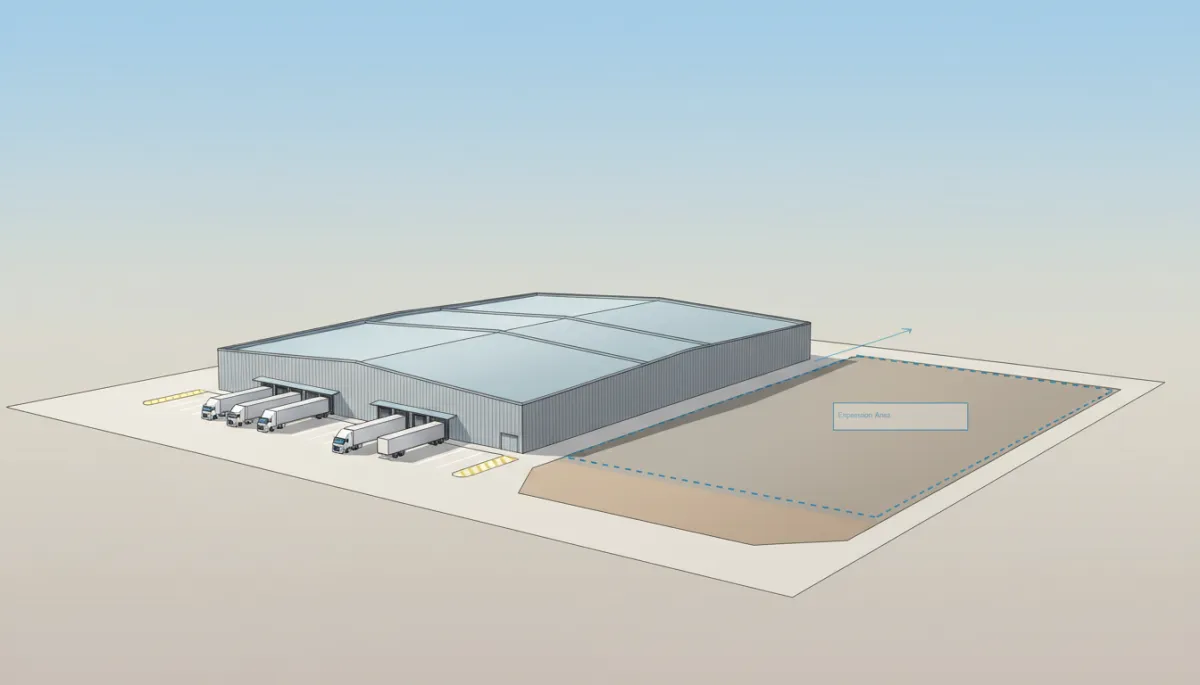
Smart site planning around circulation and future expansion protects long-term value.
Common Mistakes Texas Businesses Make When Comparing Building Types
I routinely see business owners in Dallas and Fort Worth compare a bare‑bones metal shell price to a fully finished traditional building. That is apples to oranges. You must compare equivalent scopes: shell to shell, code‑ready to code‑ready, finished to finished. Otherwise, you either overestimate metal savings or underestimate what it takes to occupy a traditional structure in 2026.
Another frequent mistake is ignoring soft costs. Design, engineering, permits, impact fees, financing costs, and contingencies can add 15–25% on top of your hard construction number. In DFW, where jurisdictions can be strict on fire protection, accessibility, and drainage, those soft costs can be substantial. Whether you choose metal or traditional, build them into your early pro forma so you are not surprised at closing or during construction.
Finally, some owners underestimate how much image matters to tenants and customers. A plain metal box on a prime retail corner in Rockwall may struggle to achieve Class A rents, even if it functions well. The good news is that strategic design moves—parapet walls, glass storefronts, canopies, and mixed materials—can elevate a metal building significantly for a fraction of the cost of full traditional construction. The key is planning that from day one, not trying to “dress it up” after the fact.
💡 Pro Tip: When you request proposals, ask for at least two options: a value‑optimized metal solution and a traditional or hybrid approach. Reviewing both with one team helps you see the true trade‑offs.
When to Call a Professional: Getting 2026 Numbers You Can Trust
Online cost ranges are useful, but they cannot replace a project‑specific budget. As soon as you have a rough building size, site location, and intended use, bring in a contractor who works with both commercial metal buildings and traditional construction. In Dallas–Fort Worth, where industrial and data center work are pulling trades in every direction, accurate lead times and labor pricing are just as important as square‑foot numbers.
If you have experienced storm damage or structural issues, especially with older metal roofs, call RYZ first, not insurance. We can document conditions, recommend repair or replacement strategies, and help you understand whether upgrading to a modern metal system or transitioning to a different construction type makes sense. Insurers are tightening requirements in many Texas counties, so having a contractor’s assessment up front can prevent missteps that hurt your claim or long‑term asset value.
Whether you are planning a new flex park in Rockwall, a manufacturing expansion in East Texas, or a mixed‑use project in DFW, early collaboration between ownership, design, and construction is where real savings show up. That is where my team and I spend most of our time—pressure‑testing options, aligning scopes, and making sure the building type truly supports your business plan.
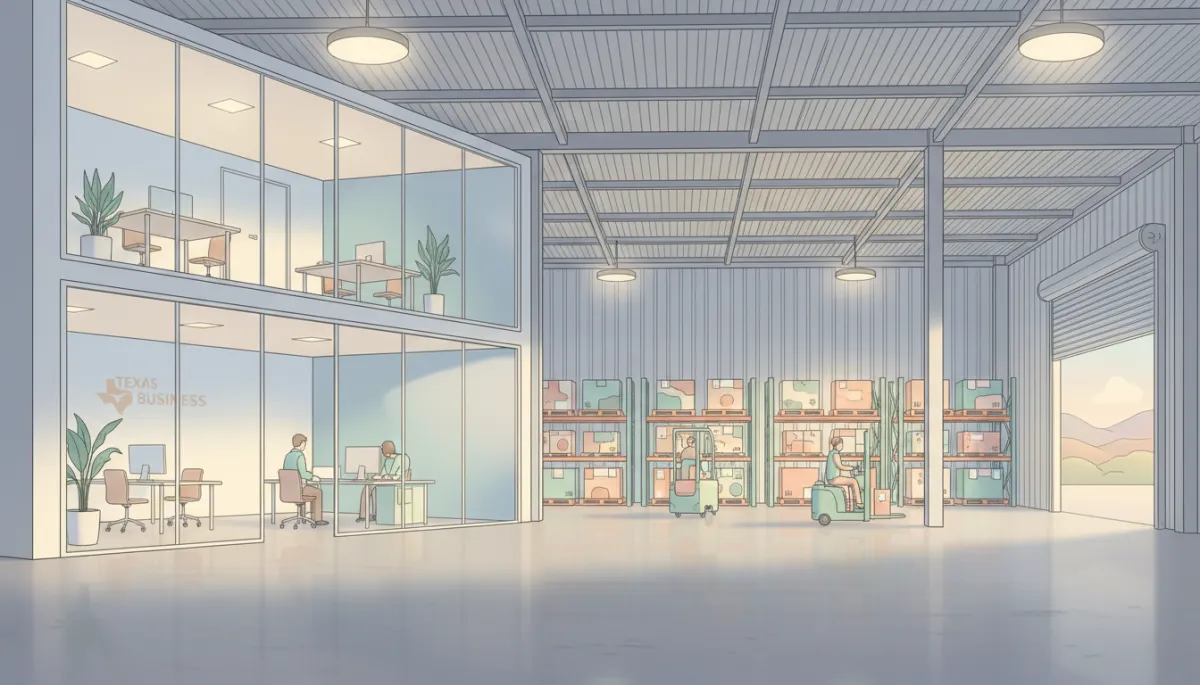
Blending office and warehouse functions in one metal structure maximizes value for many users.
Conclusion: Which Saves More in 2026—Metal or Traditional?
For most industrial, warehouse, flex, and back‑of‑house commercial projects in Texas, commercial metal buildings are the clear cost winner in 2026. Their shells are dramatically less expensive, they go up faster, and they adapt well to future expansion. When you combine those advantages with smart façade design and energy‑efficient systems, you can achieve a professional, durable facility at a fraction of the cost of traditional construction.
Traditional construction still has a strong place—particularly for high‑image office, medical, and hospitality projects in competitive urban submarkets. The key is matching the building type to your use, location, and long‑term strategy, not defaulting to what you have always done. As the “Steel King,” my goal is to help you see beyond the sticker price and choose the structure that delivers the best lifetime value for your business.
If you are weighing options for a 2026 project in Dallas, Fort Worth, Rockwall, Emory, or anywhere in East Texas, now is the time to run the numbers carefully. A short strategy session with a team that understands both metal and traditional construction can easily save you six figures—or more—before you ever move dirt.
The right building type, planned well, supports growth for decades.
About RYZ Construction
RYZ Construction is a trusted Texas construction company serving Dallas, Fort Worth, Rockwall, Emory, and communities across East Texas. Our team delivers commercial metal buildings, flex spaces, and traditional commercial projects with a focus on quality craftsmanship, integrity, and innovation. We pair practical, budget‑minded design with a customer‑first approach, guiding owners from early feasibility through punch‑out. Whether you need a cost‑effective PEMB warehouse or a more complex commercial build, we provide personalized project management from consultation through completion to keep your investment protected and your schedule on track.
Why Choose RYZ Construction for Your 2026 Commercial Project
Balanced expertise in metal and traditional builds, so you get unbiased recommendations based on your goals, not our preferences.
Deep local knowledge of DFW and East Texas markets, including zoning, permitting, and utility requirements that impact real‑world costs.
Proactive cost and schedule control, leveraging strong trade relationships to navigate 2026 labor and material challenges.
Transparent communication and on‑site presence, so you always know where your project stands and how decisions affect your bottom line.
Portfolio‑driven design support, drawing on completed RYZ projects to show what works best for similar businesses and sites.
Contact RYZ Construction
Ready to compare a commercial metal building to traditional construction for your 2026 project? Schedule a consultation, and my team and I will walk you through real numbers, real options, and a clear path forward. Call RYZ first, not insurance, if you are dealing with damage or considering a major upgrade—we will help you protect both your property and your budget.
RYZ Construction
📧 Email: [email protected]
🌐 Website: https://buildwithryz.com
Frequently Asked Questions
Are commercial metal buildings durable enough for Texas weather?
Yes, when designed and detailed correctly. Quality PEMBs handle high winds, heavy rain, and hail well, especially with standing‑seam roofs and proper connections. Regular inspections, fastener checks, and sealant maintenance help metal buildings perform reliably across North and East Texas for decades.
Can a metal building look professional enough for my office or showroom?
Absolutely. We often combine metal structures with glass storefronts, masonry accents, parapets, and canopies. This hybrid approach delivers a polished, branded appearance at a lower cost than full traditional construction, which works well for showrooms, flex spaces, and owner‑occupied offices.
How early should I involve RYZ Construction in my 2026 project planning?
Involve us as soon as you have a site in mind or a target building size. Early collaboration lets us compare metal and traditional options, flag permitting issues, align budgets with current Texas pricing, and sequence design decisions to avoid costly redesigns or schedule delays later.


