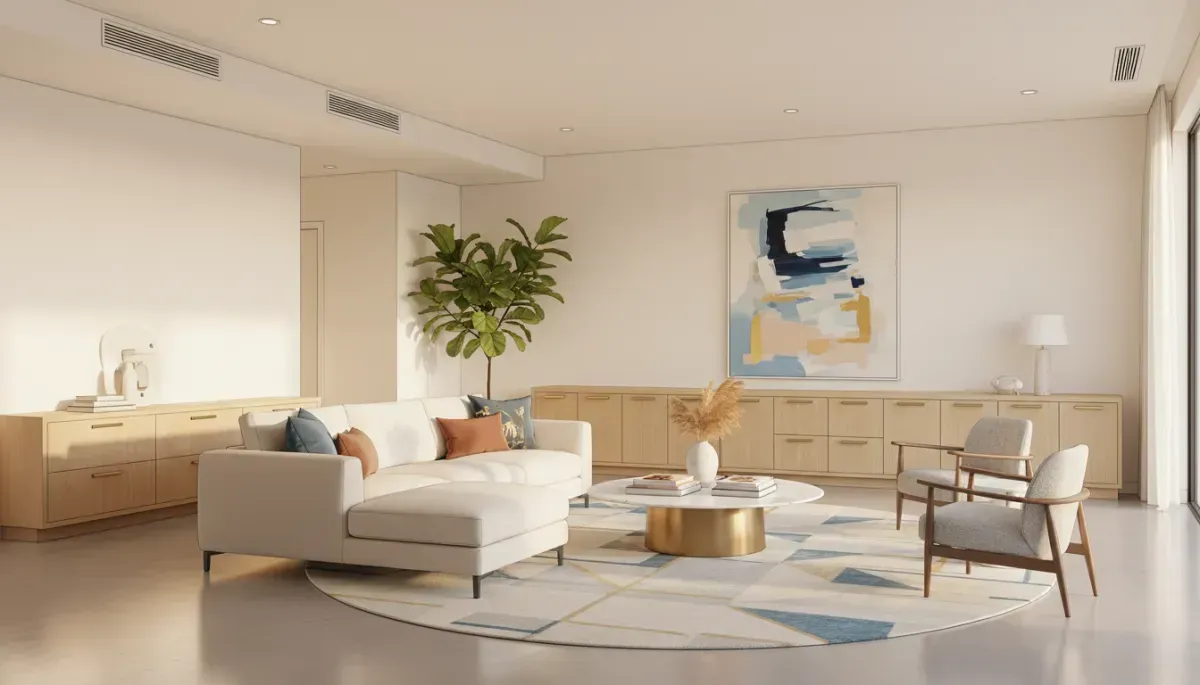
Mini-Split vs Traditional HVAC: Which Looks and Performs Best in a Modern Dallas Home?
Air Conditioning, Interior Design, Home Renovation, Dallas Homes
Mini-Split vs Traditional HVAC: Which Looks and Performs Best in a Modern Dallas Home?
Chloe “Style Maven” Harper – Your Guide to Beautiful, Comfortable Living
Let’s get this out of the way first.
You spend weeks agonizing over the perfect warm white paint, hunting down just-right brushed brass cabinet hardware, and carefully curating every piece in your living room—only to have your eye land on a giant yellowed plastic vent or a bulky metal unit that completely ruins the vibe.
Nobody wants that.
But this is Dallas. Air conditioning isn’t a “nice-to-have”—it’s a lifeline from May through October.
As a former interior designer turned full-on home product nerd, I get the same question all the time:
How do you keep your home perfectly cool without making it look like an industrial warehouse?
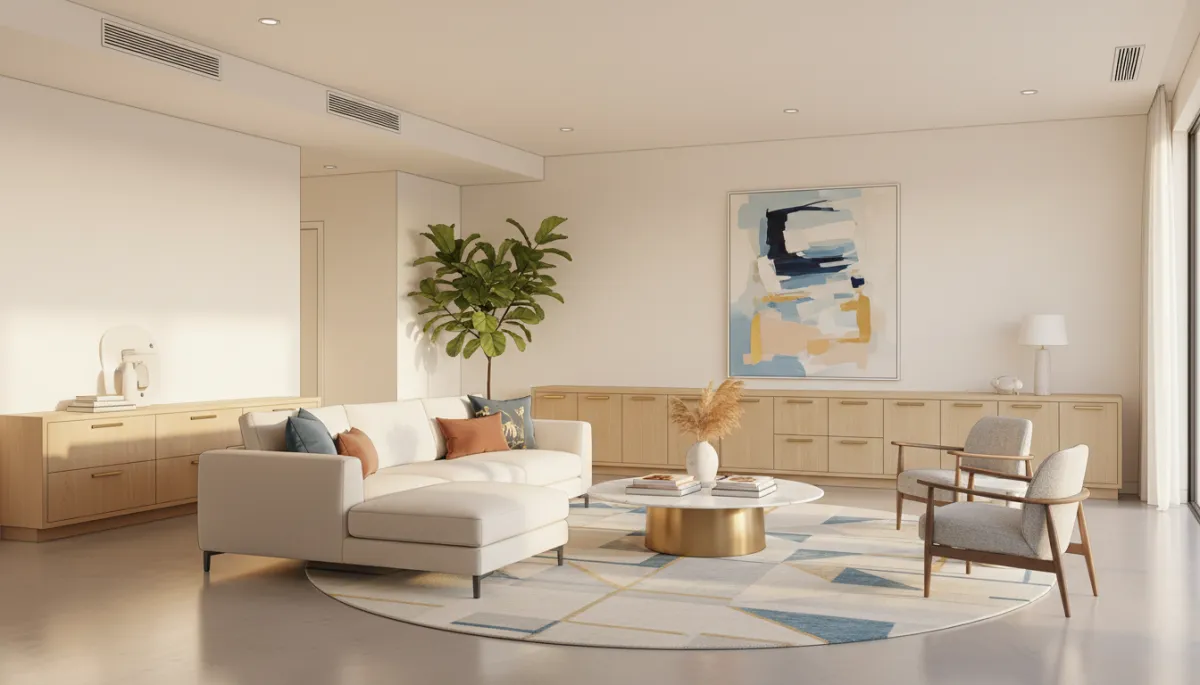
Blending your cooling system into the design is the key to a modern Dallas home.
When upgrading your home’s cooling system, you’re essentially choosing between two paths: a traditional central HVAC system or a modern mini-split system. Both will keep you cool, but they differ significantly in design impact and energy efficiency.
In this guide, we’ll break down which option is the better fit—both in looks and function—for creating a beautifully designed Dallas home.
The Classic Choice: Traditional Central HVAC
Many of us grew up with traditional central air. A massive outdoor condenser sits in the yard, a noisy air handler hides in the attic, and shiny silver ductwork snakes through the ceiling, pushing air into every room in the house.
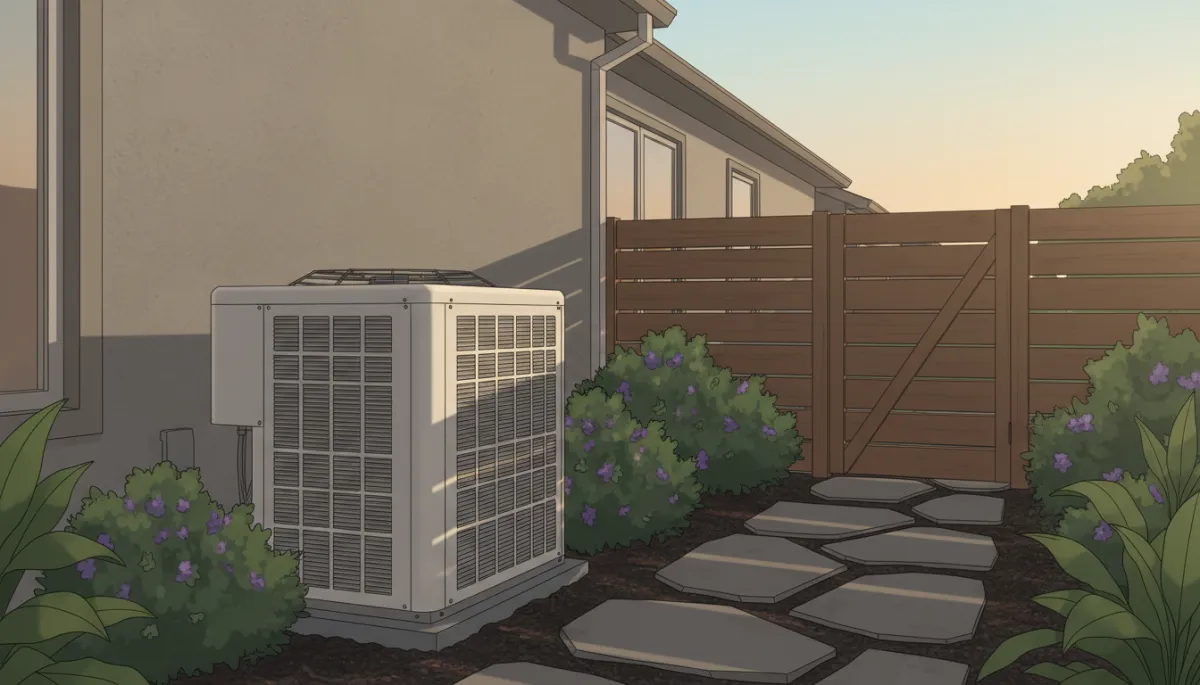
Traditional systems require large outdoor equipment that affects your exterior design.
The Design Reality of Central Air
From a purely aesthetic standpoint, central HVAC does have one major advantage: the heavy equipment is completely out of sight. You don’t have to look at a bulky blower motor while you sip your morning coffee.
However, you still have to live with the vents.
Standard builder-grade ceiling and floor registers are rarely designed with beauty in mind. Over time, forced-air systems can also push dust into your carefully curated spaces, leaving dark rings around bright white ceiling vents.
On top of that, traditional systems often require dropped ceilings or bulky soffits to conceal ductwork. These elements can disrupt the clean, open sightlines of a modern home—or break up the architectural charm of a historic Dallas craftsman.
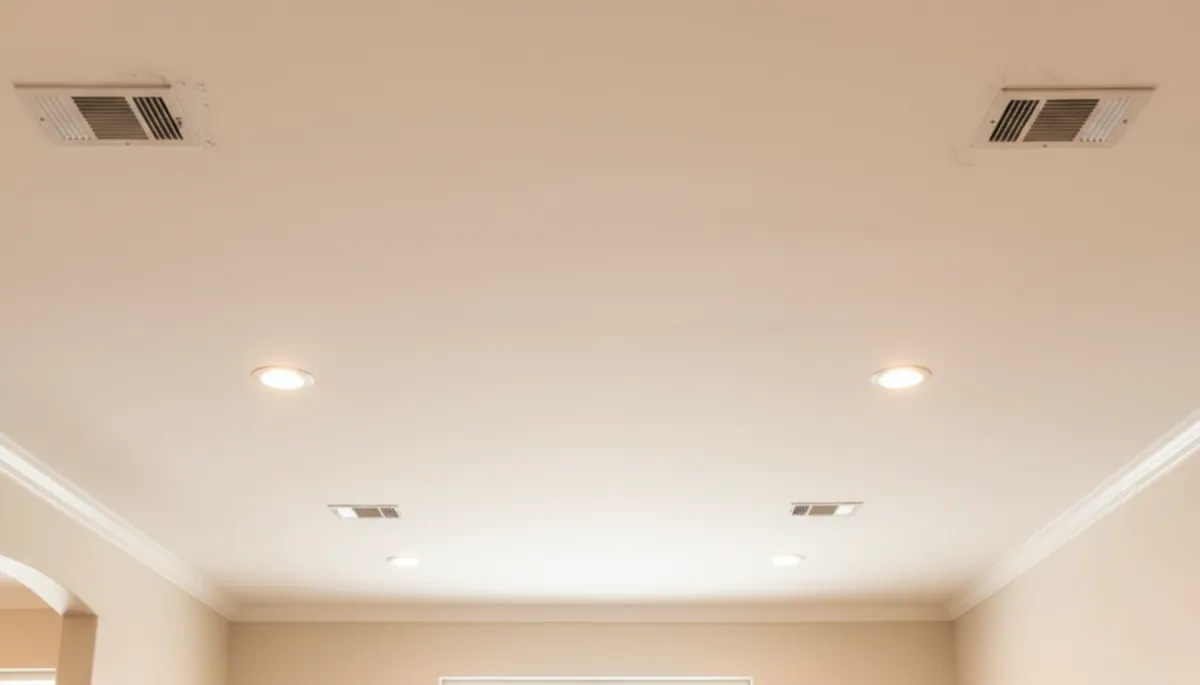
Builder-grade vents tend to collect dust and leave visible rings over time.
📌 Key Takeaway: Traditional HVAC systems may hide the main equipment, but vent placement—and the structural changes required to accommodate ductwork—can still have a significant impact on your overall room design.
The Energy Story
A traditional system is like a giant light switch for your entire house. Once it’s on, it cools everything—right down to the guest room no one has used in months.
Newer central units are far more efficient than those from 20 years ago, but you’re still essentially paying to cool spaces you’re not actually using.
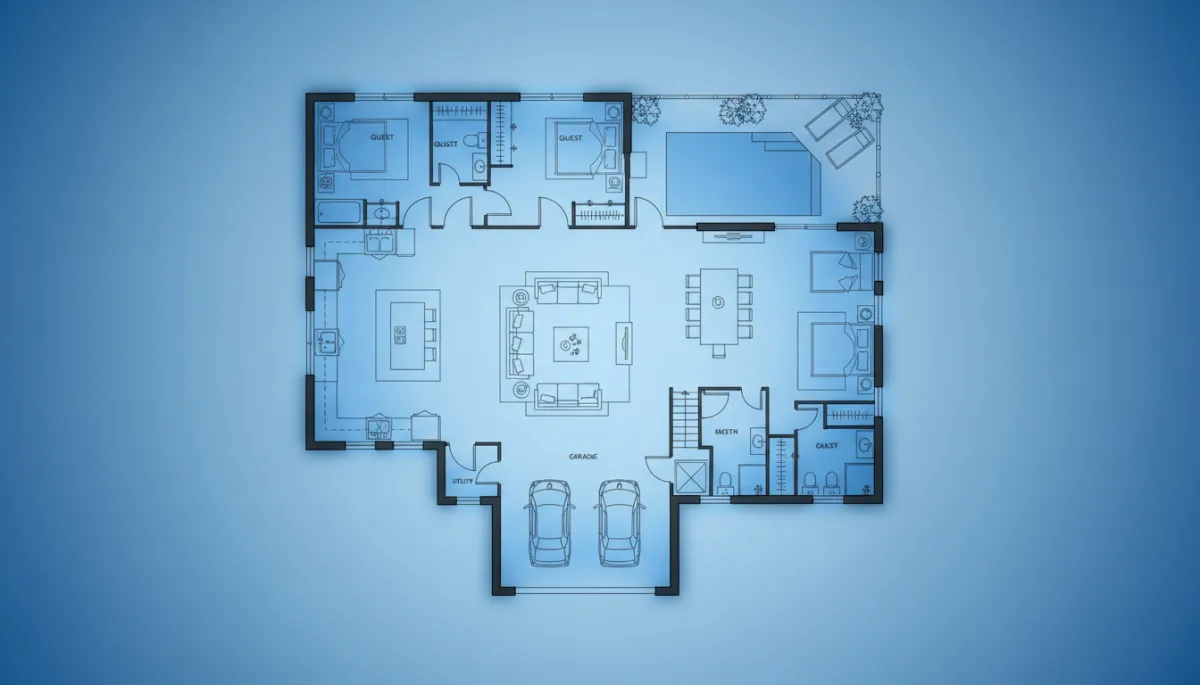
Floor plan style graphic overlay on a Dallas home interior, highlighting all rooms in blue to...
The Modern Star: Mini-Split Systems
If you want precise control over the temperature exactly where you are, while maintaining a sleek, custom look, a mini-split system is your new best friend.
Mini-split (or ductless) systems pair a compact outdoor unit with one or more indoor units. Instead of pushing air through an extensive duct network, they cool the exact room you’re in—right where you need it, when you need it.
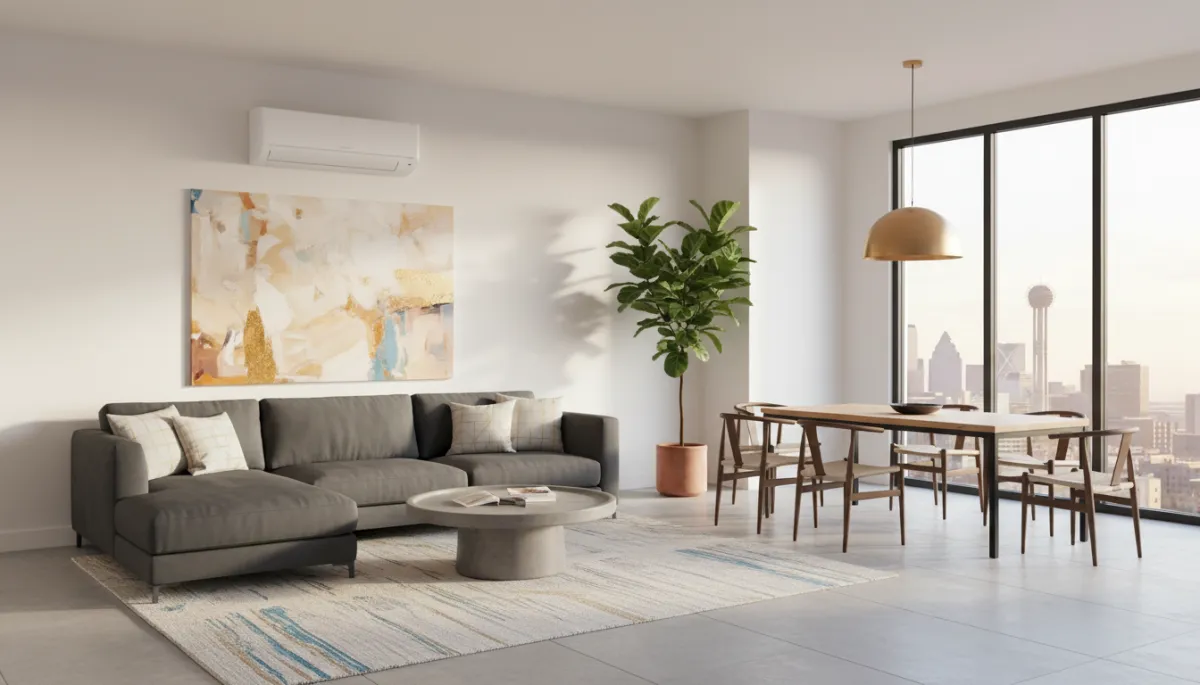
Today’s mini-splits are designed to blend seamlessly into modern interiors.
Ultimate Design Flexibility
You might be thinking, “Chloe, aren’t those the clunky plastic boxes you see stuck on motel walls?”
Absolutely not.
The technology—and the design—has evolved dramatically. Today’s high-end mini-split systems offer so much design flexibility that interior designers are genuinely obsessed with them. Here’s how you can integrate them beautifully into your home.
💡 Pro Tip: Don’t just “hide” a mini-split—treat it as an intentional architectural element, and it instantly feels more elevated.
Sleek Wall-Mounted Units: Modern wall units feature clean lines, matte finishes, and slim profiles. Mount them above main sightlines or integrate them into a bold accent wall so they read as intentional high-tech details, not awkward add-ons.
Ceiling Cassettes: If you want to keep your walls free for art and gallery-style arrangements, ceiling cassettes are an ideal option. They sit nearly flush with the ceiling, creating the look of a subtle skylight or high-end speaker grille.
Concealed Ducted Mini-Splits: This is my secret weapon in renovation projects. Tucked into a nearby closet or crawl space, the air handler connects to small, discreet vents—giving you pinpoint efficiency with zero visual clutter in the room.
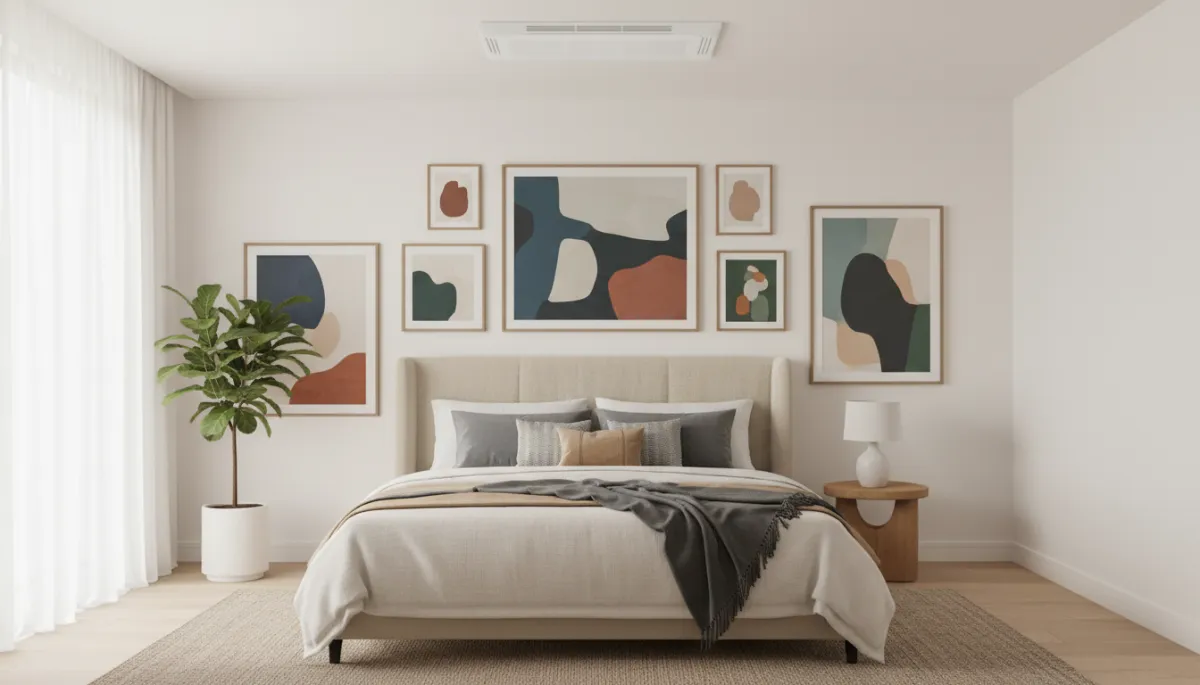
Ceiling cassettes free up every inch of wall space for art and furniture.
Efficiency That Makes Room for Decorating
Mini-splits give you true “zoned cooling.” That means you can keep your home office crisp at 70°F while letting an unused guest room rest at an energy-saving 78°F.
By cooling only the spaces you actually use, you can significantly reduce your monthly utility bills. And think about it: the money you save on summer electricity costs can go straight into that velvet accent chair you’ve been dreaming about—or the statement light fixture you’ve had your eye on.
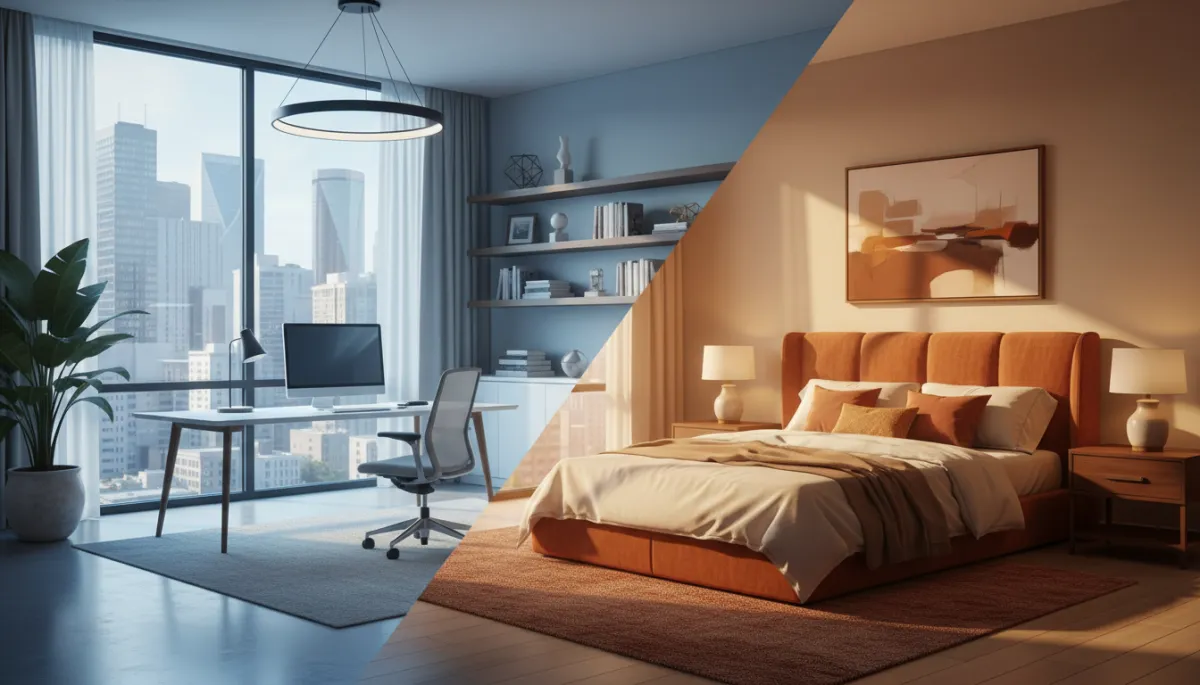
With zoned cooling, you decide which rooms get chilled and which stay relaxed.
Product Spotlight: GWIN Mini-Split Systems
When I’m helping clients choose systems at RYZ Construction, the first thing I always say is: “Let’s choose for quality.” We often recommend GWIN systems, which use high-performance Japanese compressors widely regarded as a gold standard in the industry.
You might wonder, “Why does a designer care about compressors?” The answer is simple: Japanese engineering keeps these systems whisper-quiet. And there’s nothing chic about a loud, rattling unit disrupting conversation during a beautifully styled dinner party.
GWIN systems hum softly in the background—like a calm presence in the room—cooling the space efficiently without ever stealing attention from the design.
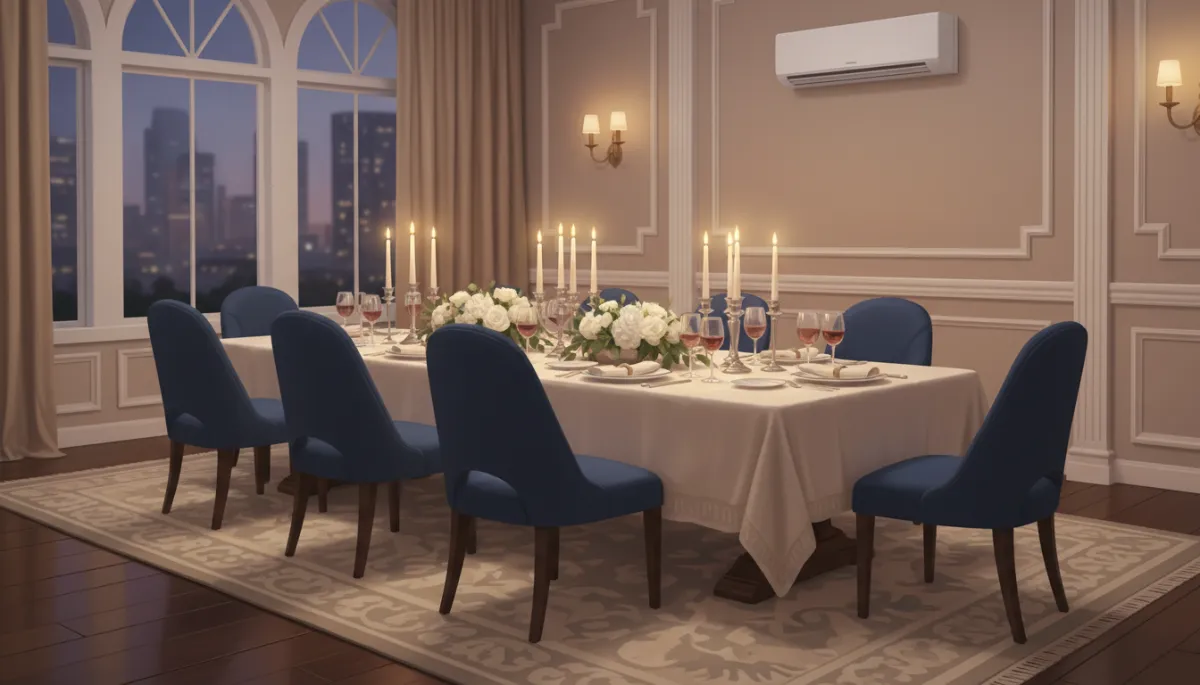
A quiet system protects the vibe—no shouting over fan noise or clunky compressors.
📌 Key Takeaway: From a designer’s perspective, “quiet” is a crucial design feature—because sound is part of how you experience a space.
Chloe’s Practical Tips for “Styling” Your Cooling System
Whether you stick with a traditional system or upgrade to a modern mini-split, you never have to sacrifice style. Here are some specific ideas to help you elevate the look of your home’s cooling components.
1. Upgrade Your Vent Covers
If you’re using a traditional system, it’s time to say goodbye to stamped metal, builder-grade vent covers. Upgrade instead to architectural grilles—think brushed brass, matte black, or custom laser-cut wood patterns that match your flooring.
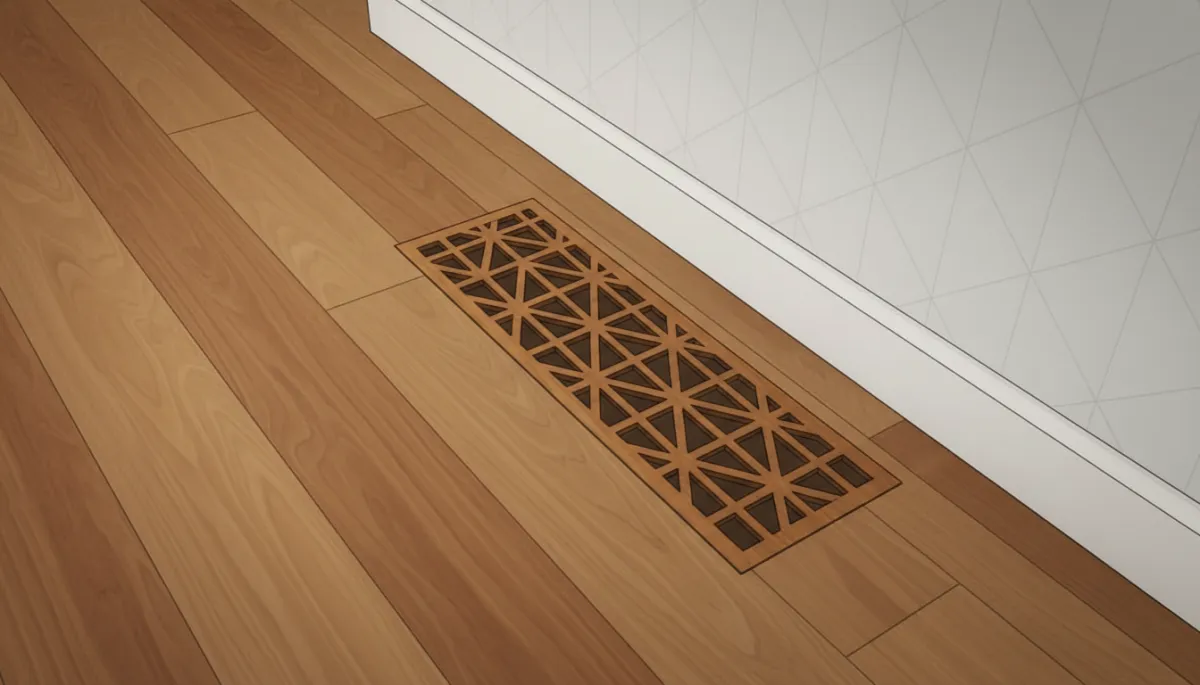
A simple vent cover upgrade can turn a utility piece into a design accent.
2. Use “Camouflage” to Your Advantage
If you choose a wall-mounted mini-split, lean into color drenching. Paint the wall behind the unit in a crisp, modern white that closely matches the unit’s casing.When the wall color matches the unit, the mini-split nearly disappears from view.
3. Build a Custom Enclosure (for Low-Mounted Units)
Some mini-splits are installed low on the wall, similar to a traditional radiator. In those cases, you can build a slatted wood cover around the unit. As long as airflow isn’t blocked, this approach lets you transform it into a chic console-style feature.
You can even style it like furniture—layered with coffee table books and a trailing pothos—so it feels like an intentional part of your interior design rather than a mechanical necessity.
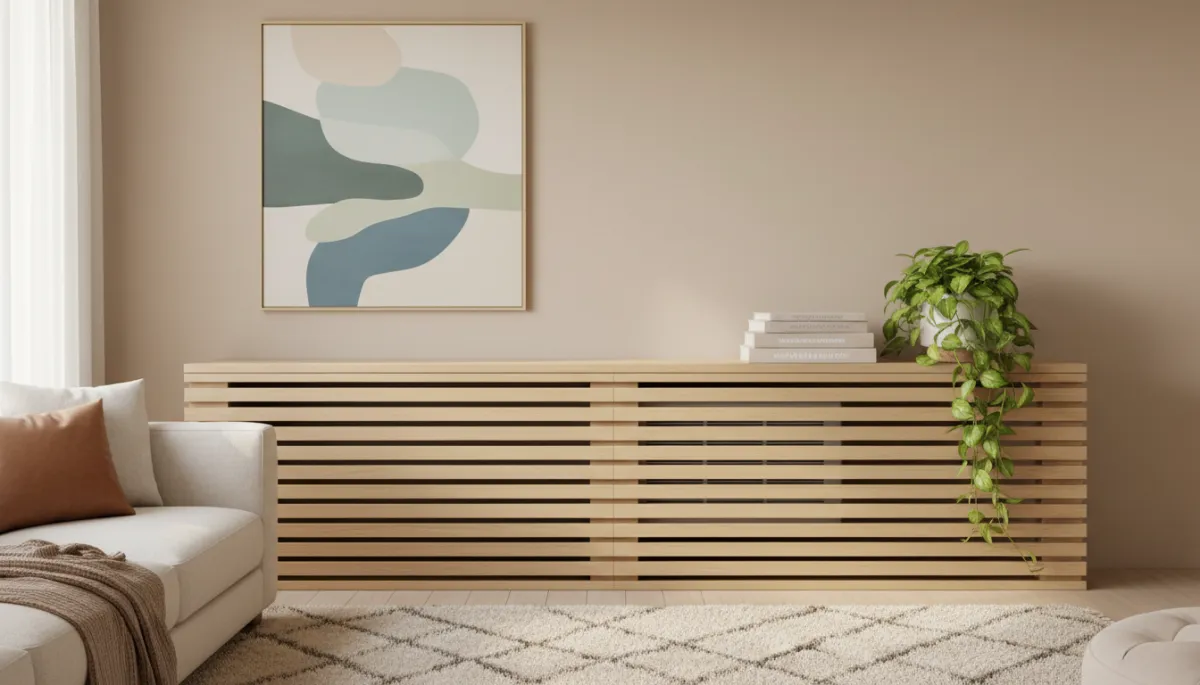
With a smart enclosure, a cooling unit can double as a stylish console.
4. Redirect the Eye
Interior design is also the art of controlling where the eye goes. If there’s a cooling component you simply can’t hide, balance its visual weight.
Hang an oversized piece of art on the opposite wall or install a dramatic chandelier. When you create a strong focal point for the eye to land on, the functional elements naturally fade into the background.
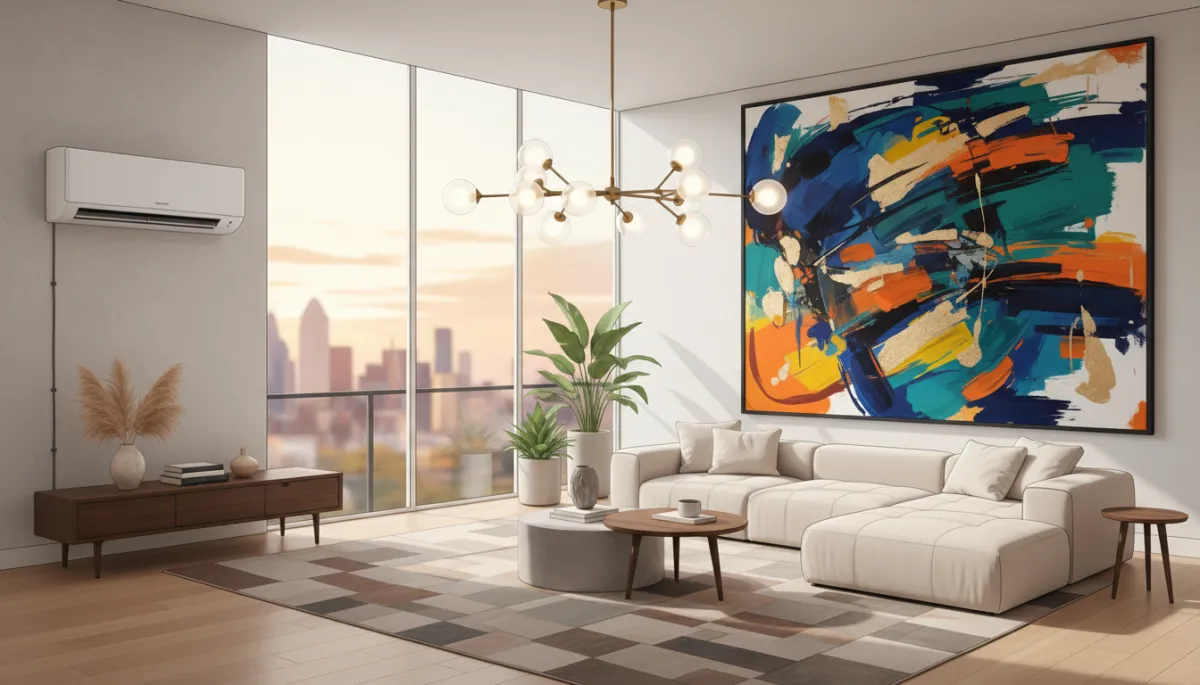
Design a stronger focal point and the functional pieces quietly recede.
💡 Pro Tip: “If you can’t hide it, give the eye something better to look at.” This is the core principle of visual distraction in interior design.
The Final Verdict
So, which system wins in the end?
If you’re doing a down-to-the-studs renovation and your dream is to hide absolutely everything from view, then a traditional system (or a fully concealed ducted mini-split) may be your preferred choice.
But if you want precise temperature control, whisper-quiet operation, and a way to cool your home without tearing up ceilings for ductwork, then a modern mini-split is the clear winner. It respects your home’s architecture while delivering outstanding comfort.
“Style and function can absolutely coexist”—your home should feel as good as it looks.
Remember, style is where function meets beauty. Your home deserves to be just as beautiful in how it works as it is in how it looks.
Ready to upgrade your comfort without compromising your aesthetic? Reach out to the team at RYZ Construction. Together, we’ll find the stylish, energy-efficient cooling solution that’s perfect for your Dallas home.